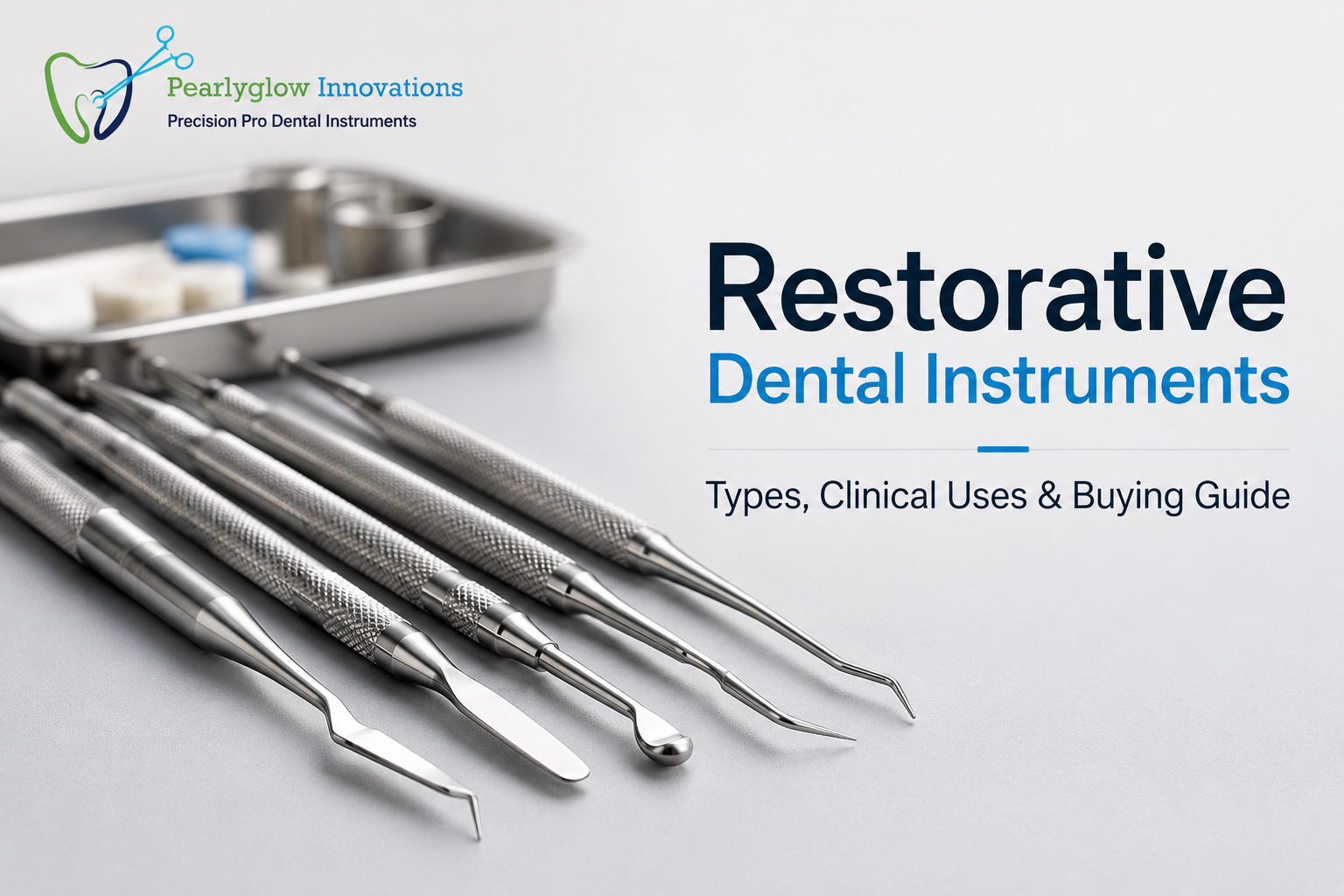
Restorative Dental Instruments: Types, Uses & Buying Guide.
Restorative dental instruments are the tools used to repair damaged or decayed teeth through fillings, bonding, and other restorative procedures. A standard set includes excavators, plastic filling instruments, cement spatulas, composite placement instruments, burnishers, and carvers. Choosing well-made restorative instruments improves precision, reduces chair time, and supports consistent clinical outcomes across procedures.
Every restoration depends on how well the instrument shapes, packs, and finishes the material in hand. Restorative dental instruments may look simple, but small differences in blade angle and tip precision directly affect how a filling holds up over time (Check more)
Why This Matters for Indian Dentists
Restorative procedures make up a large share of daily caseload in most Indian general practices. A clinic handling multiple fillings a day puts restorative instruments through repeated, high-precision use far more often than surgical or diagnostic tools. Instrument consistency becomes a daily operational factor, not just a purchasing preference.
Humidity also plays a role here, as it does across most instrument categories in Indian clinical settings. Restorative instruments with fine working ends are particularly sensitive to corrosion, since even minor surface pitting can affect how cleanly an excavator or carver shapes material. This makes steel quality and coating especially relevant when selecting restorative dental instruments for Indian practice conditions.
Clinics also differ in the materials they primarily use—composite, amalgam, or glass ionomer—and instrument needs shift slightly depending on that choice. A practice focused heavily on composite restorations needs different placement and carving tools than one still using amalgam regularly. Understanding this distinction helps in building the right restorative instrument set for your specific caseload.
What Are Restorative Dental Instruments?
Restorative dental instruments are the tools used to repair tooth structure damaged by decay, fracture, or wear. Unlike diagnostic instruments (Check more), which only assess a condition, restorative instruments are used to actively shape, place, and finish filling materials. They form the working core of everyday general dentistry.
A complete restorative instrument set typically includes six core tools, each serving a distinct function in the restoration process.
1. Dental Excavators
Excavators remove decayed or softened tooth structure before a restoration is placed. Spoon-shaped and angled variants allow access to different cavity depths and angles. A sharp, well-maintained edge is essential for clean, controlled removal of decay .
2. Plastic Filling Instruments
Plastic filling instruments place and adapt restorative material into the prepared cavity. Despite the name, these instruments are typically metal, designed with non-stick working ends suited for composite and amalgam handling. Precise tip shape affects how well material adapts to cavity walls.
3. Cement Spatulas
Cement spatulas mix and apply dental cement used as a base or liner beneath restorations. A flexible, corrosion-resistant blade ensures accurate mixing consistency. This tool sees frequent daily use across nearly every restorative procedure.
4. Composite Placement Instruments
Composite placement instruments are designed specifically for handling light-cured composite materials without sticking. Their fine, tapered tips allow precise layering and shaping in tight cavity spaces. Non-stick coating quality directly affects ease of use here.
5. Burnishers
Burnishers smooth and contour the surface of a restoration after placement, improving marginal adaptation. Ball-ended and football-shaped burnishers each suit different restoration surfaces. A polished, well-finished burnisher tip prevents material dragging.
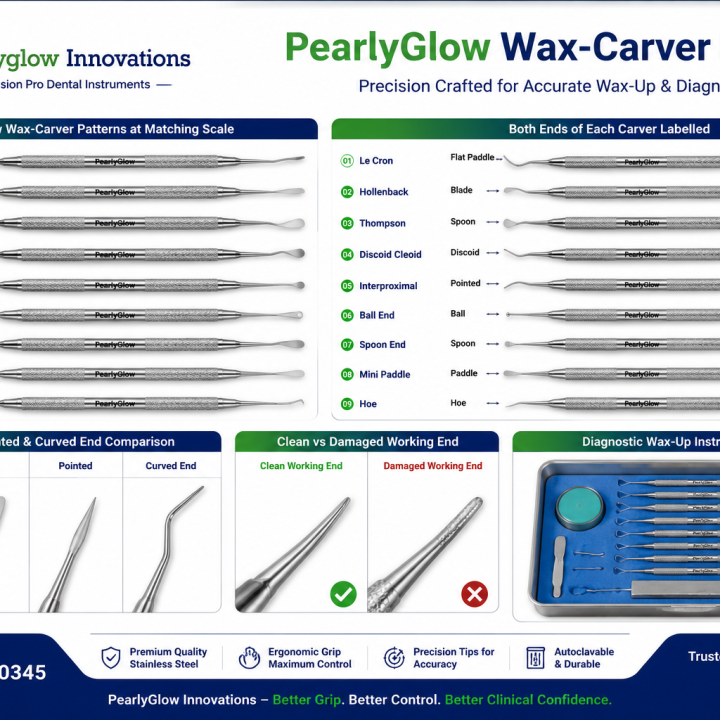
6. Carvers
Carvers shape and define anatomical contours in a restoration before it fully sets. Fine carving edges allow dentists to recreate natural tooth grooves and cusps accurately. Carver sharpness affects both function and the natural appearance of the final restoration.
Together, these six instruments make up the core restorative dental instruments and their uses that support daily filling and repair procedures.
What to Check Before Buying Restorative Dental Instruments
Restorative instrument quality is often judged by feel rather than appearance, since two visually similar tools can behave very differently in hand.
- Blade and tip precision — Consistent angles and edges matter more here than in almost any other instrument category.
- Non-stick performance — Composite placement and filling instruments should resist material sticking during use.
- Corrosion resistance — Fine working ends are more prone to surface pitting, which affects precision over time (Check more)
- Batch consistency — Instruments across different orders should feel identical in hand.
- Handle balance — A well-balanced handle reduces fatigue during longer restorative procedures.
A dependable restorative dental instruments manufacturer should be able to speak clearly to each of these points on request.
Expert Insight from PearlyGlow Innovations
PearlyGlow Innovations has worked closely with dental professionals across India on the practical demands of daily restorative work. The most frequent feedback received relates to material sticking during composite placement and gradual dulling of carving edges with repeated sterilization. PearlyGlow Innovations has served over 5,000 dentists and completed 200 implementations worldwide, and this direct clinical feedback has shaped how restorative instrument tip design and coating are evaluated for real-world use. Instruments built with consistent tip geometry and corrosion-resistant finishing tend to hold precision through significantly more procedures than generic alternatives.
Key Takeaways
- Restorative dental instruments include excavators, filling instruments, cement spatulas, composite instruments, burnishers, and carvers.
- These tools are used more frequently than most instrument categories in general practice.
- Blade and tip precision affect both clinical outcome and restoration appearance.
- Non-stick performance matters most for composite placement instruments.
- Batch consistency ensures repeat purchases perform identically to the original set.
About PearlyGlow Innovations
PearlyGlow Innovations is a premium dental instruments manufacturer built around the promise of Better Grip, Better Control, Better Clinical Confidence. The brand has served over 5,000 dentists and completed 200 implementations worldwide across general and specialist dental practices. PearlyGlow Innovations designs its restorative instruments specifically for the precision and durability demands of daily Indian clinical practice (Check more).
For catalogue and pricing, WhatsApp 98505 80345. We reply within 2 hours.
Conclusion
Restorative dental instruments handle some of the most frequent, precision-dependent procedures in daily practice. Choosing a well-made set of excavators, filling instruments, spatulas, composite instruments, burnishers, and carvers—sourced from a manufacturer that understands Indian clinical conditions (Check more) —supports cleaner restorations and more consistent results across every patient.
FAQ
What are restorative dental instruments used for? Restorative dental instruments are used to repair damaged or decayed teeth through fillings, bonding, and related procedures. They actively shape, place, and finish restorative materials rather than simply assessing a condition. They form the core toolset of everyday general dentistry.
What instruments are included in a restorative set? A standard restorative dental instruments list includes excavators, plastic filling instruments, cement spatulas, composite placement instruments, burnishers, and carvers. Each tool serves a distinct step in the restoration process. Together, they cover removal, placement, shaping, and finishing.
Why do composite placement instruments need non-stick tips? Non-stick tips prevent composite material from dragging or pulling away during placement, which affects both precision and finish quality. Sticking can lead to uneven layering and rework during a procedure. This is one of the most common quality issues reported by dentists.
How often should restorative instruments be replaced? Restorative instruments should be replaced when carving or excavating edges lose sharpness or when tips show visible wear despite proper care. With good steel quality and correct sterilization, they typically remain effective for several years. Regular inspection during reprocessing helps identify wear early.
What makes an excavator good quality? A good excavator holds a sharp, well-defined edge through repeated sterilization and removes decay cleanly with minimal pressure. Blade angle consistency and corrosion resistance are the main factors affecting performance. Lower-quality excavators dull quickly and require more manual force.
Do amalgam and composite restorations need different instruments? Composite restorations generally require non-stick placement instruments, while amalgam work relies more on traditional condensers and carvers. Some instruments, like carvers and burnishers, are used across both material types. Practices using both materials typically need a broader restorative set.