Wax Carvers for Prosthodontic Work: Working Ends, Selection and Care.
Quick Answer
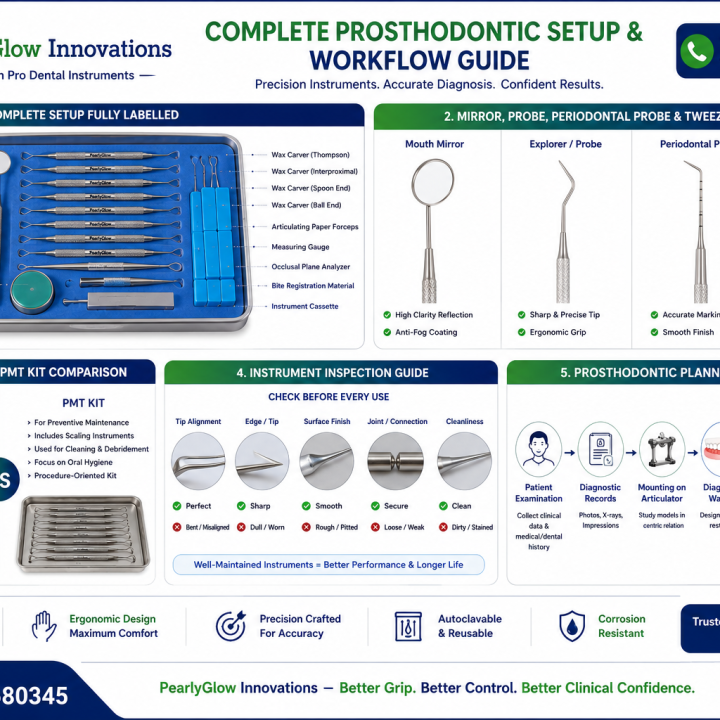
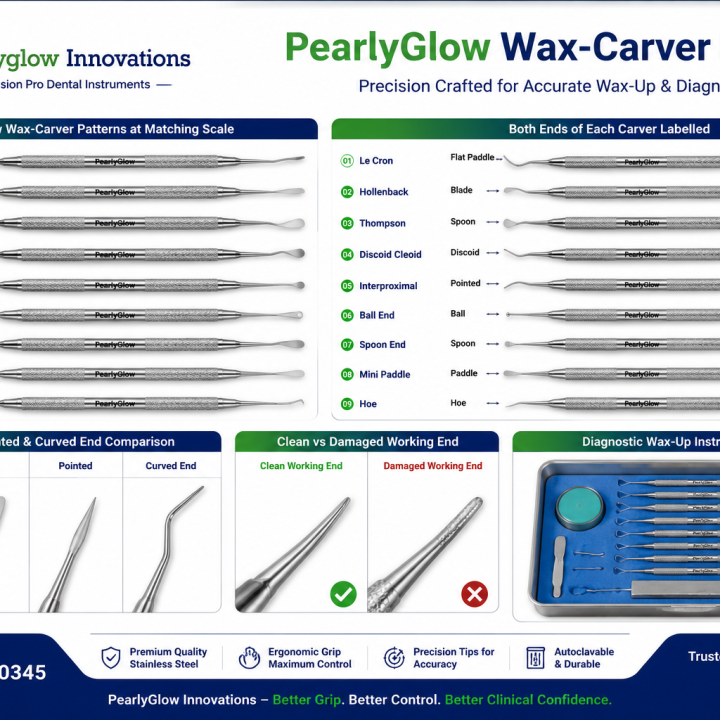
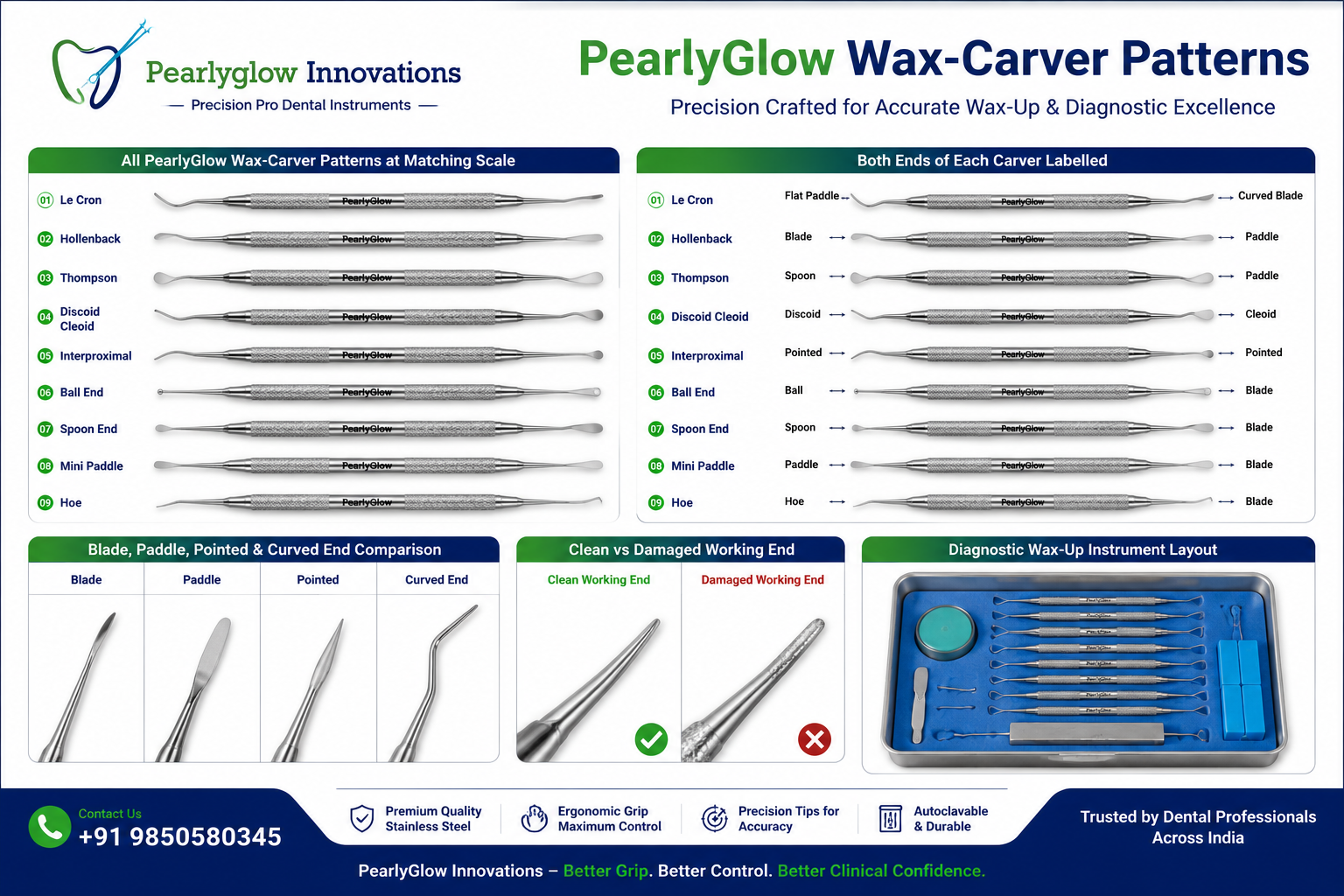
Dental wax carvers use pattern-specific blades, points, paddles or curved working ends for diagnostic wax-up, contouring and selected laboratory or provisional-material workflows. Selection depends on the material, contour, access, working-end shape, angulation and clinician or technician preference. PearlyGlow’s product page must show the actual patterns included under “Wax Carvers” rather than using one generic photograph.
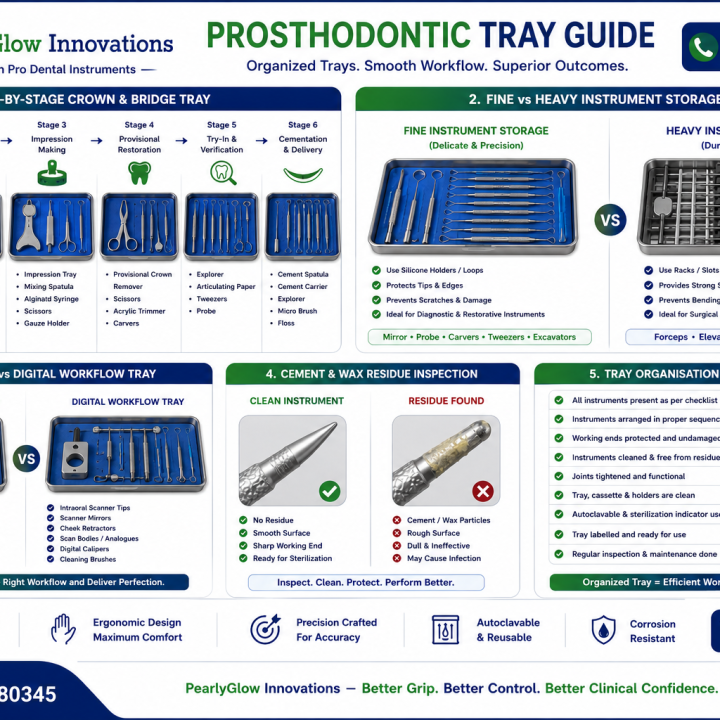
Prosthodontic treatment planning may use a diagnostic wax-up or virtual design. Traditional and digital workflows can both contribute to planning, but the instrument page should focus on verified hand-instrument design rather than suggesting that a wax carver alone determines the quality of the final prosthesis. [1,4]
Common Working-End Shapes
Working-end description | General selection focus | Verification required |
|---|---|---|
Thin blade or knife-like end | Fine contouring or separation of wax | Exact edge, width and bevel |
Paddle or spatula end | Carrying, smoothing or broader contouring | Surface, width and curvature |
Pointed or angular end | Anatomical detail and groove definition | Tip shape and angulation |
Curved carver end | Selected concave or convex contours | Curve direction and paired working end |
How to Select a Wax Carver
Identify whether the work is diagnostic wax-up, crown and bridge wax-up, denture wax or another workflow.
Choose the working-end shape required for broad contouring or fine detail.
Review both ends of a double-ended instrument.
Confirm whether heat exposure is part of the approved use and care instructions.
Check handle balance, identification and ease of cleaning around the shank.
Inspection and Care
Remove wax and residue using the approved method without scratching or changing the working end. Inspect blades and points for bending, rolling, pitting or roughness. Product-specific reprocessing instructions take priority because laboratory-only and intraoral-use instruments may have different requirements.
Frequently Asked Questions
- Are all wax carvers the same?
No. Working-end shape, size and angulation vary by pattern.
- Can one carver complete an entire wax-up?
A clinician or technician may use several patterns for different contours and details.
- Can wax carvers be used intraorally?
Only when the exact instrument and intended use support that application.
- Why should both working ends be photographed?
A double-ended carver may combine two different functions.
- When should a wax carver be replaced?
When the working end is bent, chipped, rough, corroded or no longer matches its original form.
Need Help Selecting Wax Carvers?
Message PearlyGlow 919850580345 with: Doctor/Dealer/Student/Laboratory | Required Pattern or Set | Quantity | City
WhatsApp 919850580345 PearlyGlow for verified patterns, catalogue and applicable pricing.