Questions to Ask a Dental Instrument Designer Before Ordering.
Questions Every Dentist Should Ask a Dental Instrument Designer Before Ordering
Quick Answer
A dental instrument designer shapes an instrument's grip, balance, and working-tip geometry before it ever reaches production. Before ordering a custom or OEM instrument, ask about design experience with your specific procedure type, prototyping and testing steps, material compatibility, and how design changes are handled after the first sample. Clear answers here prevent costly redesigns later.
Introduction
Custom and OEM dental instrument orders usually start with a conversation about design, not price. A dental instrument designer decides handle diameter, tip angle, hinge tension, and dozens of other details that determine whether an instrument feels natural in a dentist's hand during a long procedure.
Many clinics and dealers skip straight to discussing cost and delivery timelines, only to receive a first sample that does not match how they actually work. This article outlines the specific questions worth asking upfront, and complements the broader evaluation criteria in our pillar guide on choosing a dental instrument supplier. (check more)
Why This Matters for Indian Dentists
Dental practice patterns vary across India, from high-volume extraction clinics to specialised oral surgery centres, and a generic instrument design does not always suit every workflow. A dentist ordering a custom elevator or forceps for a specific procedure needs the designer to understand that clinical context, not just replicate an existing catalogue shape.
This matters even more for dental colleges and hospital departments standardising instrument kits across multiple practitioners with different hand sizes and techniques. A design that only suits one clinician's preference can create friction across a whole department.
What Does a Dental Instrument Designer Actually Do?
A dental instrument designer translates clinical requirements into physical specifications: handle shape and diameter, tip geometry, hinge mechanism, and overall weight distribution. This work sits between the clinical brief and the manufacturing floor, and directly affects grip control during procedures.
Good instrument design is not purely aesthetic. Small changes, such as a slightly wider handle or a modified tip angle, can measurably affect fatigue during long procedures and precision during delicate work.
Questions to Ask Before Committing to a Design
Have You Designed Instruments for This Specific Procedure Before?
A designer experienced with general dental surgical instruments may still be unfamiliar with the specific ergonomics needed for a niche procedure, such as impacted molar extraction or periodontal microsurgery. Ask for examples of similar past designs, not just a general portfolio.
What Does Your Prototyping Process Look Like?
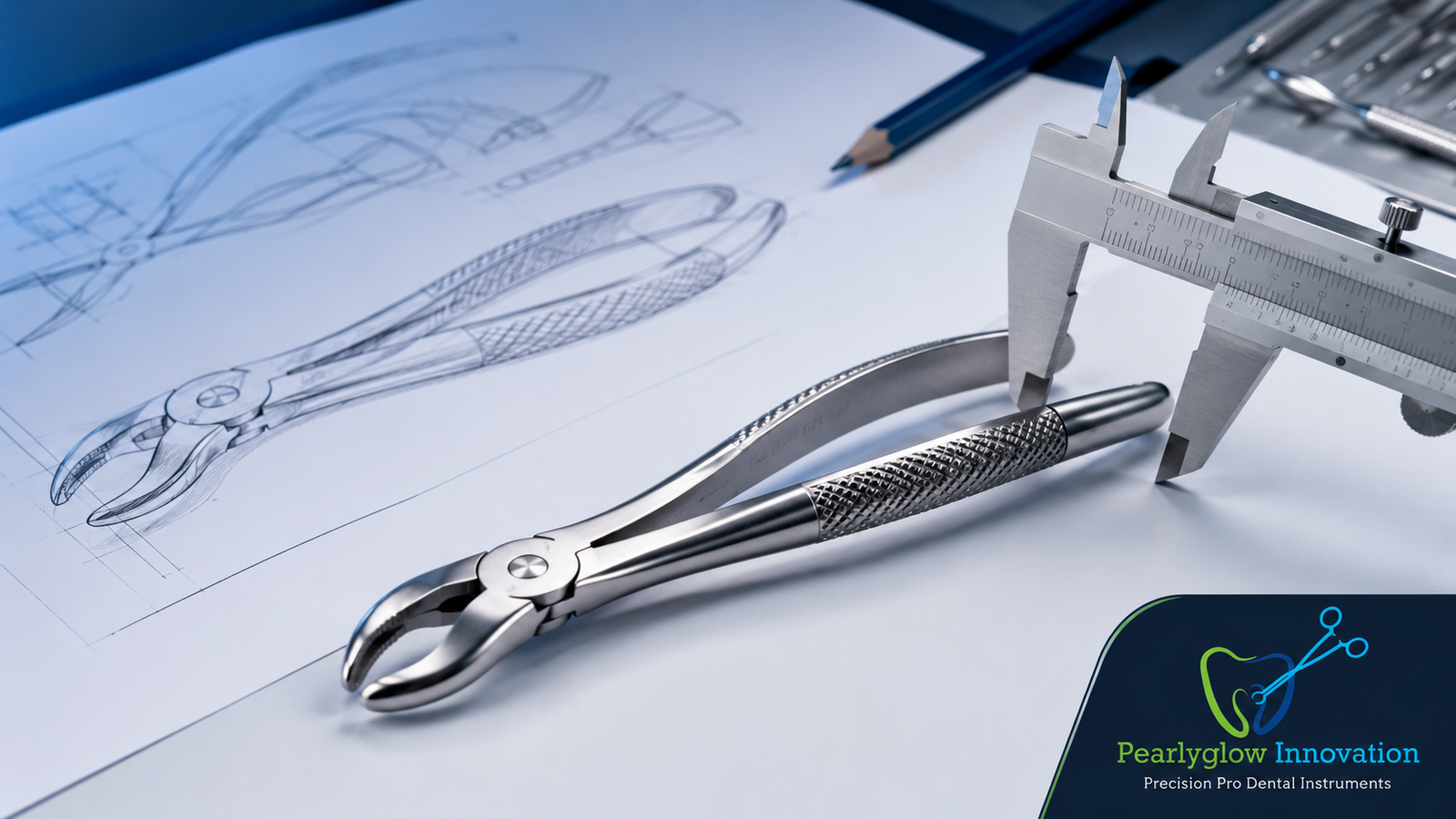
A responsible designer produces a physical prototype before committing to a full production run, and ideally allows the dentist to test-hold or trial it. Skipping straight from a sketch or CAD drawing to bulk manufacturing increases the risk of an unusable first batch.
How Are Material and Steel Grade Decisions Made?
Design and material choice are linked, since a handle shape that works well in one steel grade may feel different in another. Ask whether the designer works closely with the manufacturing team on steel selection, particularly if you are ordering from an OEM dental instrument manufacturer.
What Happens If the First Sample Needs Changes?
It is common for a first sample to need at least one round of adjustment. Ask upfront how revisions are handled, whether there is an additional cost, and what the typical turnaround time looks like for a revised sample.
Can the Design Be Adapted for Different Hand Sizes?
For dental colleges or clinics with multiple practitioners, ask whether the same base design can be offered in slightly different handle sizes or grip diameters. This avoids forcing every clinician into a single ergonomic profile.
Who Owns the Final Design?
For dealers or clinics investing in a distinctive design, it is worth clarifying design ownership and whether the same specifications could be offered to a competing buyer later. This is a reasonable question to raise directly rather than assume.
How This Differs from Ordering Off a Standard Catalogue
Ordering premium dental instruments from an existing catalogue skips the design conversation entirely, since specifications are already fixed. This is faster and usually cheaper, and suits most standard clinical needs without modification.
Custom design work makes sense specifically when a standard catalogue does not fit a particular procedure, hand size, or institutional standardisation goal. Dentists should be clear with themselves about which category their need falls into before starting a custom design conversation, since it changes both cost and timeline expectations.
Expert Insight from PearlyGlow Innovations
At PearlyGlow, our design conversations typically start with understanding the specific procedure and grip preference before any drawing work begins. We produce physical prototypes for review rather than relying solely on digital renderings, since a design that looks correct on screen does not always translate to a comfortable in-hand feel.
For OEM and institutional orders, we also involve our production team early in the design phase, particularly around steel grade and finishing choices, since these decisions affect both feel and durability. This approach generally reduces the number of revision rounds needed before a design is finalised .(check more)
Key Takeaways
- A dental instrument designer's decisions directly affect grip, balance, and fatigue during long procedures.
- Ask about experience with your specific procedure type, not just general design portfolio work.
- Insist on a physical prototype before committing to a full production run.
- Clarify how design revisions are handled, including cost and turnaround time, before starting.
- Custom design work is worthwhile mainly when a standard catalogue does not fit your specific clinical or institutional needs.
About PearlyGlow Innovations (check more)
PearlyGlow Innovations Pvt. Ltd. is a Pune-based manufacturer of premium dental and surgical instruments, built around the promise of Better Grip. Better Control. Better Clinical Confidence. We work directly with dentists, oral surgeons, clinics, hospitals, dental colleges, and dealers on both standard and custom instrument orders. For design or OEM enquiries, message us on WhatsApp at 98505 80345.
Conclusion
A dental instrument designer shapes far more than an instrument's appearance, influencing grip comfort and clinical control long before it reaches a patient. Asking specific questions about procedure experience, prototyping, and revision handling before committing to a design protects both your budget and your timeline. Review our pillar guide for the complete framework on evaluating any dental instrument supplier before you place your next order.
FAQs
1. What is the role of a dental instrument designer? A designer determines an instrument's handle shape, tip geometry, hinge mechanism, and weight distribution before it goes into production, directly affecting grip and clinical control.
2. Should I always see a prototype before ordering in bulk? Yes, wherever possible, since a physical prototype reveals ergonomic issues that are not always visible in a digital drawing.
3. Is custom instrument design more expensive than catalogue ordering? Generally yes, due to design time and prototyping, so custom work is best reserved for cases where a standard catalogue genuinely does not fit your needs.
4. Can a design be adjusted for different practitioners' hand sizes? Many designers can offer handle size variations on a shared base design, which is worth requesting for institutions with multiple practitioners.
5. How many rounds of design revision are typical? This varies by designer, but asking about the process and any associated cost upfront avoids surprises later.
6. Does material choice affect instrument design? Yes, handle shape and steel grade are closely linked, so design and manufacturing decisions ideally happen in coordination rather than separately.
7. Who should consider ordering a custom-designed dental instrument? Clinics or dental colleges with specific procedural needs, or dealers seeking a distinctive product line, are the typical candidates for custom design work.