
Premium Dental Instrument Storage: Best Practices Guide .
Premium Dental Instrument Storage: Best Practices for Indian Clinics
Quick Answer
Premium dental instrument storage requires a clean, dry, dust-free environment, organized cassettes or trays, and clear separation between sterile and non-sterile instruments. Poor storage after sterilization can undo the entire decontamination process, even when the sterilization cycle itself was done correctly.
Introduction
A dentist can follow every sterilization step correctly and still hand a compromised instrument to an assistant, simply because it sat in the wrong storage box for two days. Premium dental instrument storage is the step most infection control training skips, even though it directly determines whether a sterile instrument stays sterile until the moment it's used.
This gap matters more than most clinics realize. An instrument pouch that gets crushed, stacked incorrectly, or exposed to humidity can lose its sterility without any visible sign of damage.
Why This Matters for Indian Dentists
Indian clinics often operate in smaller physical spaces than clinics in markets with dedicated sterile processing departments, which means storage areas frequently double as general supply cabinets. Humidity is also a bigger factor here, particularly in coastal and monsoon-affected regions, where ambient moisture can compromise pouch seals faster than in drier climates.
Compare this to clinics in markets with mandated sterile storage protocols, where dedicated, climate-controlled storage cabinets are standard equipment rather than an optional upgrade. In India, many clinics still store sterilized instrument trays in the same cabinet as consumables or paperwork, which increases contamination risk without anyone necessarily noticing (Check more).
What Counts as Proper Dental Instrument Storage
Proper storage after sterilization means instruments stay in their sealed sterilization pouches or cassettes until the moment they're needed, in a designated area separate from non-sterile items (Check more). This single rule prevents most contamination risks linked to storage.
Storage location should be a closed cabinet or drawer, away from sinks, windows, and high-traffic areas where dust and moisture collect. Storage duration matters too, since most sterilization pouches carry an event-related shelf life rather than a fixed expiry, meaning integrity depends on how the pouch is handled, not just how much time has passed.
Choosing the Right Storage System
Dental instrument cassettes keep related instruments grouped together through cleaning, sterilization, and storage, reducing the handling that individual loose instruments require (Check here). This matters for instrument protection, since fewer touchpoints mean fewer chances for a pouch seal to be damaged or a coating to be scratched.
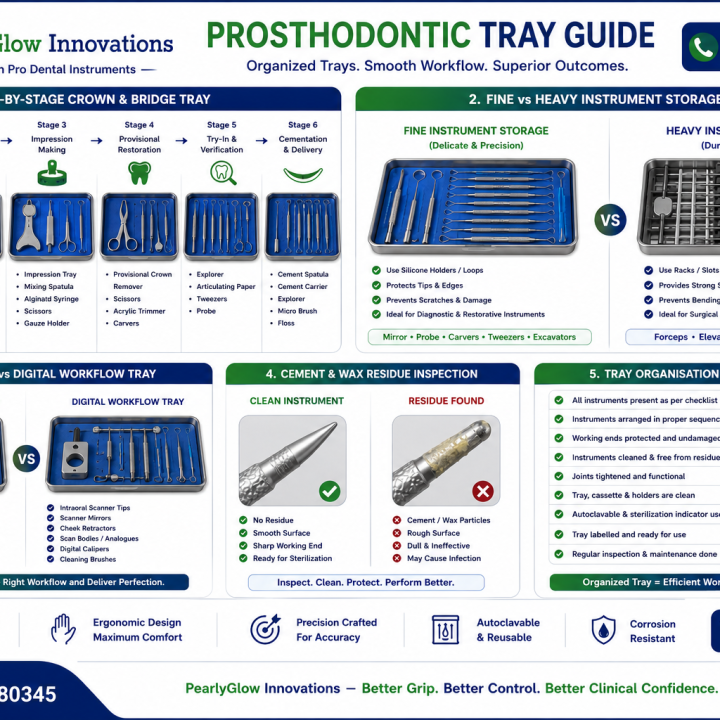
Autoclavable instrument trays serve a similar purpose but work best for instrument sets used together in a single procedure, like an extraction kit or a periodontal set . Dental instrument organizers with individual compartments help prevent instruments from knocking against each other in storage, which is a common but overlooked cause of surface scratching on premium dental instruments.
Surgical instrument containers with secure, tight-fitting lids offer the best dust-free storage for clinics without a dedicated sterile processing room. Open trays, even in closed cabinets, still allow dust accumulation over time.
Common Storage Mistakes in Indian Clinics
Storing sterilized pouches under direct sunlight near a window is more common than it should be, and UV exposure combined with heat can weaken pouch seals over weeks. Stacking heavy trays on top of lighter pouches is another frequent issue, since the pressure can create micro-tears in sterilization pouches that aren't visible without close inspection.
Reusing storage boxes without regular cleaning also introduces contamination risk, even when the instruments inside are technically still sterile. A clean storage environment isn't a one-time setup; it needs the same routine attention as the sterilization process itself.
Expert Insight from PearlyGlow Innovations
Instrument storage is often treated as an afterthought once sterilization is complete, but the two processes are directly connected. A well-sterilized instrument stored in a humid or dusty cabinet can develop surface oxidation or contamination risk within days, undoing the sterilization step entirely.
PearlyGlow Innovations designs its instrument cassettes and organizers with individual compartments specifically to reduce instrument-to-instrument contact during storage, since repeated contact is one of the most common causes of coating wear on premium dental instruments. Clinics that pair proper storage practices with corrosion-resistant instruments typically see fewer replacements over the instrument's working life, based on feedback gathered across PearlyGlow Innovations' clinic network (Check more).
Key Takeaways
- Premium dental instrument storage protects sterility only when pouches and cassettes remain sealed and undisturbed until use
- Humidity is a bigger storage risk in Indian clinics than in drier climates, especially during monsoon months
- Dental instrument cassettes reduce handling and lower the risk of pouch damage compared to loose instrument storage
- Storage location matters as much as sterilization itself, since sunlight, dust, and stacking pressure all compromise sterility
- Regular cleaning of storage boxes and cabinets is as essential as cleaning the instruments themselves
About PearlyGlow Innovations
PearlyGlow Innovations Pvt. Ltd. manufactures premium dental instruments and storage cassettes designed to protect instrument integrity from sterilization through to clinical use. The brand has served more than 5,000 dentists across India and completed 200 implementations for clinics and institutions worldwide. PearlyGlow Innovations builds every product around one standard: better grip, better control, better clinical confidence.
WhatsApp us at 98505 80345 — just send: "Hi PearlyGlow, please send me the catalogue." We'll respond within 2 hours.
Conclusion
Premium dental instrument storage isn't a secondary detail after sterilization; it's the step that determines whether all that earlier effort actually holds. Clinics that invest in proper cassettes, dust-free containers, and a clean, dry storage environment protect both patient safety and instrument lifespan in one move.
FAQ
How long can sterilized dental instruments stay in storage?
Most sterilization pouches use event-related shelf life, meaning sterility depends on the pouch remaining sealed and undamaged rather than a fixed time limit. However, most clinics rotate stock within a few weeks to minimize handling risk over time.
What is the best way to store dental instrument cassettes?
Dental instrument cassettes should be stored in closed cabinets away from sinks, windows, and high-traffic areas where dust and moisture accumulate. Keeping cassettes separate from non-sterile items prevents accidental cross-contamination during daily clinic use.
Can humidity affect sterilized dental instruments in storage?
Yes, humidity can weaken sterilization pouch seals over time, particularly in coastal or monsoon-affected regions of India. This makes climate-controlled or at least dry, closed storage important for maintaining instrument sterility.
Do premium dental instruments need special storage compared to standard ones?
Premium dental instruments with coatings benefit from storage that minimizes instrument-to-instrument contact, since repeated contact can wear coatings over time. Individual compartments in organizers or cassettes reduce this risk more effectively than loose tray storage.
How often should storage cabinets and trays be cleaned?
Storage cabinets and trays should be cleaned on a regular schedule, similar to other clinical surfaces, rather than only when visibly dirty. A clean storage environment prevents dust and residue from compromising instruments even when pouches remain sealed.
Is it safe to stack sterilization pouches on top of each other?
Stacking heavy trays or cassettes directly on top of lighter sterilization pouches can create pressure points that lead to micro-tears in the pouch material. Storing pouches flat and unstacked, or in designated compartments, reduces this risk significantly.