
Periodontal Probe Guide: Why One Millimetre Can Change Diagnosis
A periodontal probe may look simple, but one millimetre can change the clinical conversation.
A shallow reading, deep pocket, bleeding point, furcation concern, or attachment level can influence diagnosis, treatment planning, maintenance intervals, and patient communication.
Why Periodontal Probing Matters
Periodontal probing helps dentists assess gum health, pocket depth, bleeding response, attachment changes, and disease progression.
It supports diagnosis and helps patients understand their condition.
A good periodontal probe allows the dentist to measure consistently and gently.
Measurement Accuracy
Accurate probing depends on clear markings, controlled pressure, correct angulation, tactile feedback, and consistent recording.
If markings are faded or unclear, the dentist may lose confidence in readings.
Small differences matter in periodontal diagnosis.
Tactile Feedback
A periodontal probe should communicate tissue resistance clearly.
The dentist should be able to feel pocket depth, root surface direction, and tissue response without applying excessive pressure.
Gentle probing improves both accuracy and patient comfort.
Handle Grip and Control
A stable handle helps the dentist maintain consistent pressure.
If the handle is slippery or poorly balanced, probing may become inconsistent.
Good grip supports both precision and comfort.
What Dentists Should Check Before Buying
Check marking clarity
Check probe type
Check tip finishing
Check handle grip
Check balance
Check stainless steel quality
Check autoclavability
Check rust resistance
Check cleaning ease
Check durability of markings
Selection Mistakes to Avoid
Using probes with faded markings
Applying excessive pressure
Using poor angulation
Skipping full-mouth charting
Choosing poor handle grip
Ignoring posterior access
Not replacing damaged probes
PearlyGlow Clinical Connection
PearlyGlow Innovations Pvt. Ltd. develops, designs, innovates, prototypes, mass-produces, and supplies dental instruments and dental equipment for modern clinical dentistry.
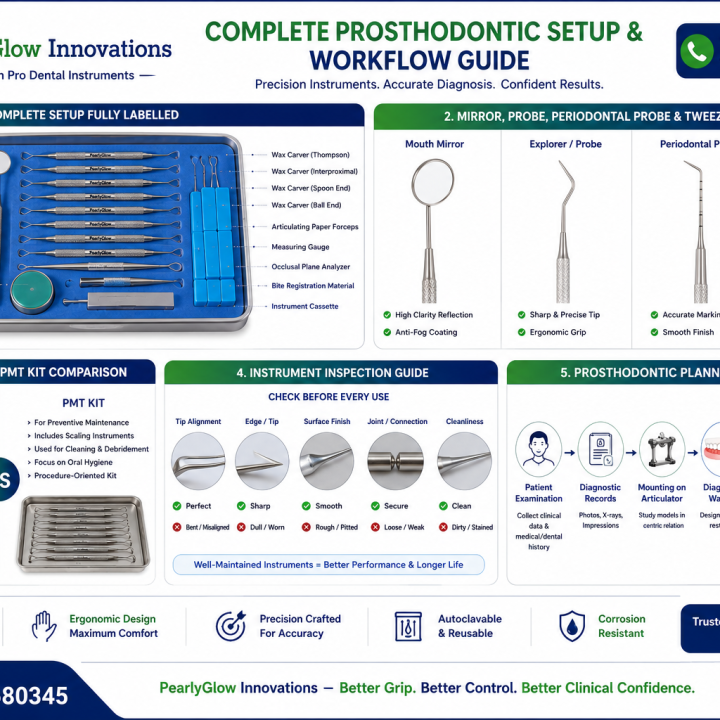
PearlyGlow periodontal probes are developed with attention to marking clarity, tactile control, grip, stainless steel quality, autoclavability, and dependable diagnostic performance.
FAQs
What is a periodontal probe used for?
A periodontal probe is used to measure pocket depth and support gum disease diagnosis and monitoring.
Why do probe markings matter?
Clear markings help dentists measure and record pocket depths accurately.
Can probing hurt patients?
Probing should be gentle. Discomfort may occur with inflammation, but excessive pressure should be avoided.
What is a UNC probe?
A UNC probe has detailed millimetre markings and is commonly used for periodontal charting.
How often should probing be done?
Frequency depends on patient risk, periodontal condition, and maintenance planning.
Explore PearlyGlow periodontal probes for diagnostic accuracy, clear markings, tactile feedback, and reliable daily examination.
Better diagnosis begins with better measurement.
Better Grip. Better Control. Better Clinical Confidence.