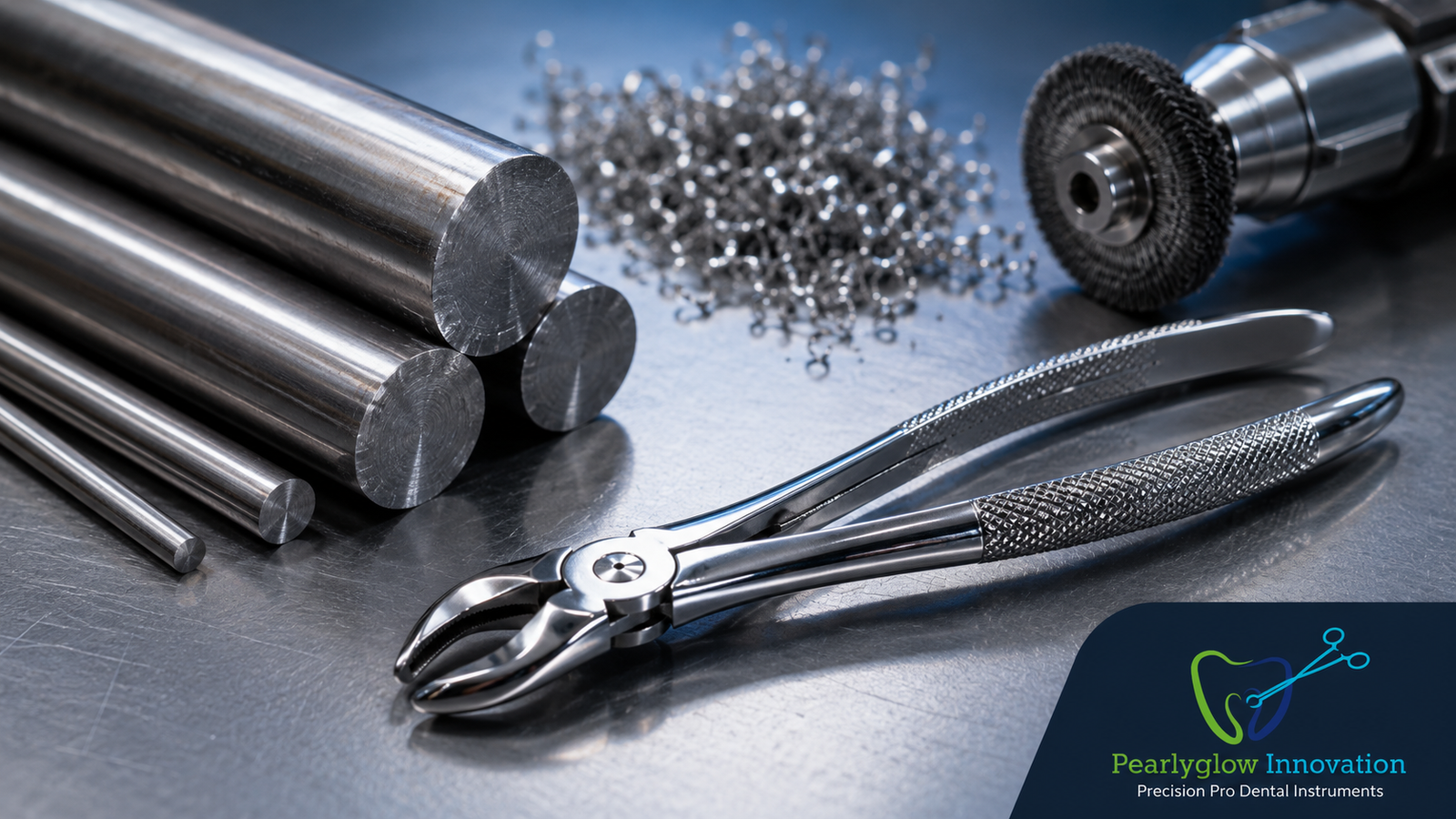
Medical-Grade Stainless Steel in Dental Instruments
Medical-Grade Stainless Steel in Dental Instruments: Why It Matters
Quick Answer
Medical-grade stainless steel matters in dental instruments because it directly determines edge sharpness retention, resistance to corrosion from repeated sterilisation, and how long an instrument stays clinically reliable. Lower-grade steel may look identical at purchase but dull faster, corrode sooner, and fail earlier under routine autoclave cycles, making steel quality a core factor in any dental instrument buying decision.
Introduction
Two dental forceps can look nearly identical on a shelf, yet perform very differently after a few months of clinical use. The difference usually comes down to the steel used to make them, not the shape or the polish on the surface.
This article explains what "medical-grade" steel actually means for dental instruments and why it deserves attention before an order is placed. For a broader framework on evaluating any vendor, see our pillar guide on choosing a dental instrument supplier. (Check more)
Why This Matters for Indian Dentists
India's dental clinics run instruments through frequent autoclave sterilisation cycles, often multiple times a day in a busy practice. Steel that cannot withstand repeated high-temperature, high-moisture cycles will show pitting, discoloration, or corrosion far sooner than properly specified medical-grade steel.
This has direct financial and clinical consequences. A clinic replacing instruments every few months due to premature wear is paying more over time than one investing in properly specified steel from the outset, even if the initial purchase price was lower.
What Does "Medical-Grade Stainless Steel" Actually Mean?
Medical-grade stainless steel refers to steel alloys specifically formulated and heat-treated for surgical and dental use, distinct from general-purpose stainless steel used in non-clinical products. These alloys are chosen for a specific balance of hardness, corrosion resistance, and the ability to hold a fine edge or working tip.
The two most common families used in dental surgical instruments are martensitic stainless steels, valued for hardness and edge retention in cutting instruments, and austenitic stainless steels, valued more for corrosion resistance in non-cutting components. The correct choice depends on the specific instrument and its function.
Why Steel Grade Affects Sharpness
Cutting and gripping instruments, such as extraction forceps and elevators, rely on the steel's hardness to hold a precise edge or grip surface under repeated use. Steel that is too soft dulls quickly, while steel that is too hard without proper tempering can become brittle and chip.
Correctly heat-treated medical-grade steel balances these two properties, allowing an instrument to stay sharp and precise across many procedures rather than a handful.
Why Steel Grade Affects Corrosion Resistance
Autoclave sterilisation exposes instruments to high heat and moisture repeatedly, which is where steel composition becomes critical. Medical-grade stainless steel contains sufficient chromium content to form a stable protective oxide layer that resists this repeated exposure.
Instruments made from inconsistent or lower-grade steel often show early signs of corrosion, such as surface staining or pitting, well before their expected working life is over.
How Steel Quality Affects Instrument Longevity
Instrument longevity depends on more than just the steel itself; heat treatment, forging quality, and finishing all play a role. However, steel grade sets the ceiling on what proper processing can achieve, meaning even excellent manufacturing cannot fully compensate for substandard raw material.
A dental instruments manufacturer in India that controls its own steel sourcing and heat treatment can generally offer more consistent longevity across a batch than a supplier reselling instruments without visibility into the original material specification.
How to Ask About Steel Quality Before Buying
Dentists and procurement teams do not need to be metallurgists to ask useful questions before a bulk order. A few direct questions can reveal a lot about a seller's transparency.
- What specific steel grade or classification is used for this instrument?
- Is the steel sourced and processed in-house, or purchased pre-finished from a third party?
- How does the instrument perform after repeated autoclave cycles in testing?
- Is there any documentation available confirming the material specification?
A seller who can answer these clearly is generally more credible than one offering only general assurances like "surgical-grade" without specifics.
Expert Insight from PearlyGlow Innovations
At PearlyGlow, steel selection is one of the first decisions made in our production process, since it directly shapes how an instrument performs across its working life. We work with martensitic-grade steels for cutting and gripping instruments where edge retention and hinge durability matter most.
Because we control forging and heat treatment in-house, we can maintain consistent hardness specifications across a production batch rather than depending on variable pre-finished stock. We encourage dentists and procurement teams to ask any supplier for specific steel grade information rather than accepting general terms like "surgical-grade" without further detail.
Key Takeaways
- Medical-grade stainless steel is specifically formulated for the hardness, sharpness, and corrosion resistance dental instruments require.
- Martensitic steels typically suit cutting and gripping instruments; austenitic steels typically suit corrosion-focused, non-cutting components.
- Poor steel quality shortens instrument life through early dulling, hinge wear, or corrosion, even if the instrument looks fine at purchase.
- Manufacturers with direct steel sourcing and heat-treatment control can offer more consistent quality than resellers without that visibility.
- Always ask for specific steel grade information rather than accepting vague terms like "surgical-grade" at face value.
About PearlyGlow Innovations (Check more)
PearlyGlow Innovations Pvt. Ltd. is a Pune-based manufacturer of premium dental and surgical instruments, built around the promise of Better Grip. Better Control. Better Clinical Confidence. We control steel sourcing and heat treatment in-house for consistent instrument quality across every batch. For material specification or bulk order queries, message us on WhatsApp at 98505 80345.
Conclusion
Steel quality is one of the least visible but most important factors in how long dental instruments stay clinically reliable. Instruments that look identical at the point of sale can perform very differently after months of sterilisation and daily use, depending entirely on the steel behind them. Review our pillar guide for a complete framework on evaluating a dental instrument supplier, including how to ask about material quality before you order.
FAQs
1. What is medical-grade stainless steel in dental instruments? It refers to steel alloys specifically formulated and heat-treated for surgical and clinical use, offering a defined balance of hardness, sharpness retention, and corrosion resistance.
2. Why do some dental instruments corrode faster than others? Corrosion resistance depends on chromium content and steel processing quality; lower-grade or inconsistently processed steel forms a weaker protective layer against repeated sterilisation exposure.
3. What is the difference between martensitic and austenitic steel in dental instruments? Martensitic steel is generally used for cutting and gripping instruments where hardness and edge retention matter most, while austenitic steel is used more for corrosion-focused, non-cutting parts.
4. Can I tell steel quality just by looking at an instrument? No, steel quality is not usually visible at purchase; it only becomes apparent after repeated clinical use and sterilisation cycles, which is why asking the supplier directly matters.
5. Does steel grade affect how often instruments need replacing? Yes, higher-quality medical-grade steel generally extends instrument life by resisting dulling, hinge wear, and corrosion for longer under normal use.
6. Should I ask my supplier what steel grade they use? Yes, a specific answer about steel classification and processing is a reasonable and useful question before placing a bulk order.
7. Are all instruments labelled "surgical-grade" the same quality? No, "surgical-grade" is often used loosely without specifying the exact steel grade or treatment process, so it is worth asking for more precise detail.