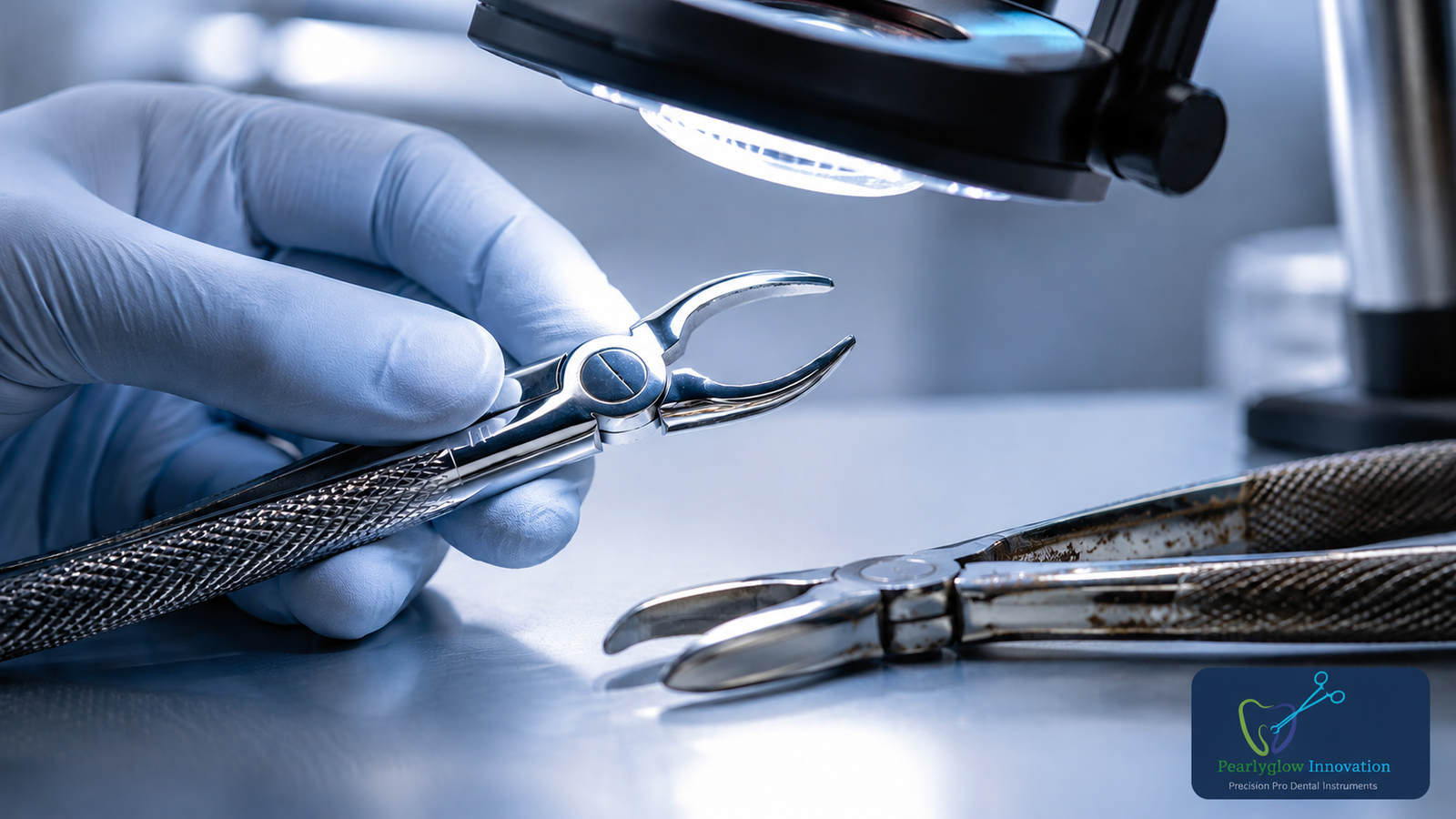
How to Evaluate Rust Resistant Dental Instruments
How to Evaluate Rust Resistance in Dental Instruments
Quick Answer
Rust resistant dental instruments can be evaluated by checking surface finish quality, tracking performance across repeated autoclave cycles, and asking the supplier direct questions about steel composition and processing. Early signs of poor rust resistance include surface staining, pitting, or discoloration appearing within the first few months of routine sterilisation, well before an instrument's expected working life should end.
Introduction
Rust and corrosion rarely show up on day one. A newly purchased instrument can look flawless at delivery and only reveal its true rust resistance after weeks or months of regular autoclave cycles.
This creates a real evaluation problem for dentists and procurement teams buying in bulk, since visual inspection at the point of sale is not enough on its own. This article walks through practical ways to evaluate rust resistant dental instruments before committing to a large order, building on the broader vendor criteria in our pillar guide on choosing a dental instrument supplier. (Check more)
Why This Matters for Indian Dentists
Busy Indian clinics often run multiple autoclave sterilisation cycles per day, and hospitals and dental colleges sterilise instruments across shared inventories used by many practitioners. This frequency puts real, repeated stress on an instrument's surface finish and steel composition.
An instrument that shows early corrosion is not just a cosmetic problem. Pitting and staining create surfaces where bacteria can lodge more easily, which is a genuine infection-control concern alongside the added cost of early replacement.
What Causes Rust and Corrosion in Dental Instruments?
Corrosion occurs when an instrument's protective oxide layer, formed by adequate chromium content in the steel, breaks down under repeated exposure to heat, moisture, and cleaning chemicals. This layer is what gives corrosion resistant dental instruments their ability to withstand routine autoclave sterilisation.
Instruments made with inconsistent steel grade, incomplete heat treatment, or poor surface finishing are more vulnerable, since any of these factors can weaken or unevenly distribute that protective layer.
How to Evaluate Rust Resistance Before Purchase
Ask About Steel Composition Directly
A reliable dental instruments manufacturer in India should be able to state the steel classification used and explain why it suits corrosion resistance, not just describe the instrument as "stainless" in general terms. Vague answers here are worth treating as a caution sign.
Request Autoclave-Cycle Performance Information
Ask whether the supplier has tested or can describe how their instruments perform after a set number of sterilisation cycles. A supplier confident in their steel and finishing quality should have some basis for this claim beyond general assurance.
Examine Surface Finish Quality
A smooth, evenly polished surface reduces the microscopic imperfections where corrosion tends to start first. Inconsistent polishing, visible tool marks, or an uneven finish can indicate lower manufacturing quality control, even on new stock.
Check for Batch Consistency
Ask whether the instruments in your order come from a single production batch or mixed sourcing. Mixed-batch stock from a dental instrument distributor can introduce inconsistent corrosion resistance within the same order, even under the same product listing.
How to Evaluate Rust Resistance After Purchase
Inspect Regularly After Sterilisation Cycles
Set a simple routine of visually checking instruments after every several dozen autoclave cycles, looking specifically for early discoloration, spotting, or dullness at the hinge and tip areas. Catching early signs allows a clinic to raise a warranty concern before the problem worsens.
Track Instrument Age and Usage
Keeping a basic log of when premium dental instruments were purchased and roughly how often they are sterilised helps distinguish normal wear from a genuine quality issue. This is particularly useful when raising a concern with a supplier, since specific usage data supports a clearer warranty conversation.
Compare Against Manufacturer Claims
If a supplier claims a specific sterilisation-cycle lifespan, compare actual performance against that claim over time. A consistent gap between claimed and actual performance is useful evidence when discussing replacement or warranty terms.
Warning Signs of Poor Rust Resistance
A few specific signs are worth watching for closely, since they typically appear before an instrument fails outright.
- Brown or orange surface staining, especially near the hinge or tip
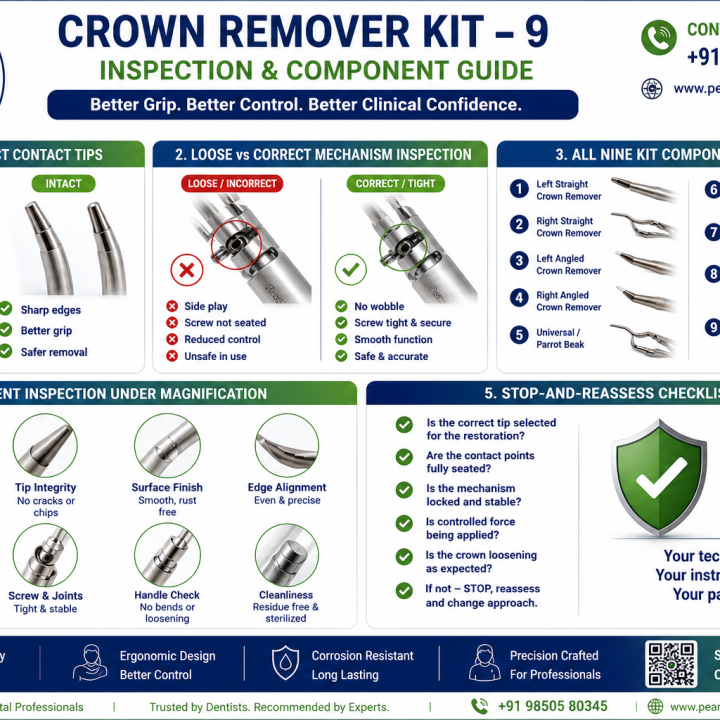
- Small pitting or dimpling visible under close inspection or magnification
- A dull, uneven surface where the instrument once had a uniform polish
- Stiffness or grinding sensation developing at hinge joints over time
Expert Insight from PearlyGlow Innovations
At PearlyGlow, corrosion resistance is one of the specific properties we account for when selecting steel and finalising heat-treatment parameters, since our instruments are intended for repeated clinical sterilisation. We also maintain batch-level production records, which allows us to trace a corrosion concern back to a specific production run if one is reported.
We encourage dentists and procurement teams to ask any supplier, including us, for specific information about steel composition and expected performance across sterilisation cycles rather than relying on general terms like "rust-proof" without further detail. Clear, specific answers are a reasonable expectation before a bulk order.
Key Takeaways
- Rust resistance is not reliably visible at the point of purchase and often only becomes clear after months of sterilisation use.
- Ask suppliers directly about steel composition, heat treatment, and any autoclave-cycle performance data.
- Surface finish quality and batch consistency both affect how well an instrument resists corrosion over time.
- Set up a simple routine of post-sterilisation visual inspection to catch early warning signs.
- Manufacturers with direct control over steel sourcing and processing can generally offer better traceability if a corrosion issue arises.
About PearlyGlow Innovation (c heck more)
PearlyGlow Innovations Pvt. Ltd. is a Pune-based manufacturer of premium dental and surgical instruments (Check here) , built around the promise of Better Grip. Better Control. Better Clinical Confidence. We select steel and control heat treatment in-house specifically to support consistent corrosion resistance across every batch. For material specification or warranty queries, message us on WhatsApp at 98505 80345.
Conclusion
Evaluating rust resistant dental instruments takes more than a glance at a shiny new instrument; it requires asking the right questions before purchase and watching for early warning signs afterward. A supplier who can speak specifically about steel composition, heat treatment, and sterilisation performance is generally more trustworthy than one offering only general assurances. Review our pillar guide for the complete framework on evaluating a dental instrument supplier before your next bulk order.
FAQs
1. How quickly can rust appear on a poorly made dental instrument? This varies, but early signs like staining or pitting can appear within a few months of regular autoclave use if steel quality or finishing is inadequate.
2. What causes corrosion in dental instruments despite being "stainless"? Corrosion occurs when the steel's protective oxide layer, dependent on adequate chromium content and proper processing, breaks down under repeated heat and moisture exposure.
3. Can surface finish alone predict rust resistance? Not entirely, but a smooth, evenly polished finish reduces microscopic weak points where corrosion often starts, making it a useful visual indicator alongside direct supplier questions.
4. Should I ask my supplier for autoclave-cycle test data? Yes, this is a reasonable question, and a supplier's willingness or ability to answer specifically is informative about their manufacturing confidence.
5. Is it normal for dental instruments to show any discoloration over time? Minor wear can be normal with age, but early or uneven staining, especially near hinges, is generally a sign worth raising with the supplier rather than dismissing.
6. Does buying from a manufacturer improve rust resistance compared to a supplier? Manufacturers with direct control over steel sourcing and heat treatment can generally offer more consistent corrosion resistance and better traceability than resellers without that visibility.
7. How often should I inspect instruments for early corrosion signs? A simple routine check after every several dozen sterilisation cycles is a practical starting point for catching issues early.