How Many Autoclave Cycles Should Instruments Last?
Dental Instrument Autoclave Cycles: How Many Should Your Instruments Last?
Quick Answer
Well-manufactured extraction and surgical instruments typically withstand 1,000 or more dental instrument autoclave cycles before losing grip texture or edge performance, though the actual figure varies by steel grade, forging process, and maintenance routine. Delicate instrument types, such as periodontal probes, generally have a shorter realistic cycle life than heavier surgical tools.
"How many autoclave cycles will this actually last?" is a question most Indian clinics never ask a supplier before buying, yet it's one of the most useful numbers for budgeting instrument replacement. Understanding realistic dental instrument autoclave cycles, and what actually shortens them, turns a vague sterilisation habit into a measurable maintenance plan For a broader understanding of instrument quality, maintenance, and selection, read our complete guide to premium dental instruments (Check more).
This guide breaks down what determines cycle life across different instrument types, and the specific habits that extend or shorten it in daily practice.
Why This Matters for Indian Dentists
Sterilisation frequency in Indian clinics tends to be higher than a fixed weekly schedule might suggest, since patient volume in many urban practices runs well above what a smaller clinic in a less dense market would see. Instruments in high-turnover clinics can pass through an autoclave several times a day, which accumulates cycle count far faster than an annual replacement plan accounts for.
India's dental instrument market is also fragmented across manufacturers with very different steel and forging standards, meaning two instruments that look identical can have meaningfully different real-world cycle lives. Without a stated, tested cycle rating from the manufacturer, a clinic has no reliable way to plan replacement timing or budget for it in advance.
Knowing your instruments' realistic autoclave cycle rating turns replacement into a planned expense rather than a reactive one triggered by mid-procedure failure.
What Determines an Instrument's Autoclave Cycle Life
Three manufacturing factors set the ceiling on how many autoclave cycles an instrument can realistically withstand, before maintenance habits are even considered. Steel grade is the starting point, since a genuine surgical-grade stainless steel resists the repeated heat and pressure exposure of autoclaving far better than a lower-grade alternative.
Forging versus casting is the second factor, and it matters more here than almost anywhere else. A forged instrument's denser internal grain structure resists the microscopic fatigue that repeated heat cycling causes, while a cast instrument's looser structure tends to develop fatigue cracking and hinge play earlier in its working life.
Finish quality is the third factor, since a properly polished, low-porosity surface resists moisture penetration during each cycle, which directly affects how quickly corrosion or pitting begins to appear.
Typical Cycle Expectations by Instrument Type
Different instrument categories have different realistic cycle expectations, largely due to differences in blade thickness, mechanism complexity, and stress exposure during use.
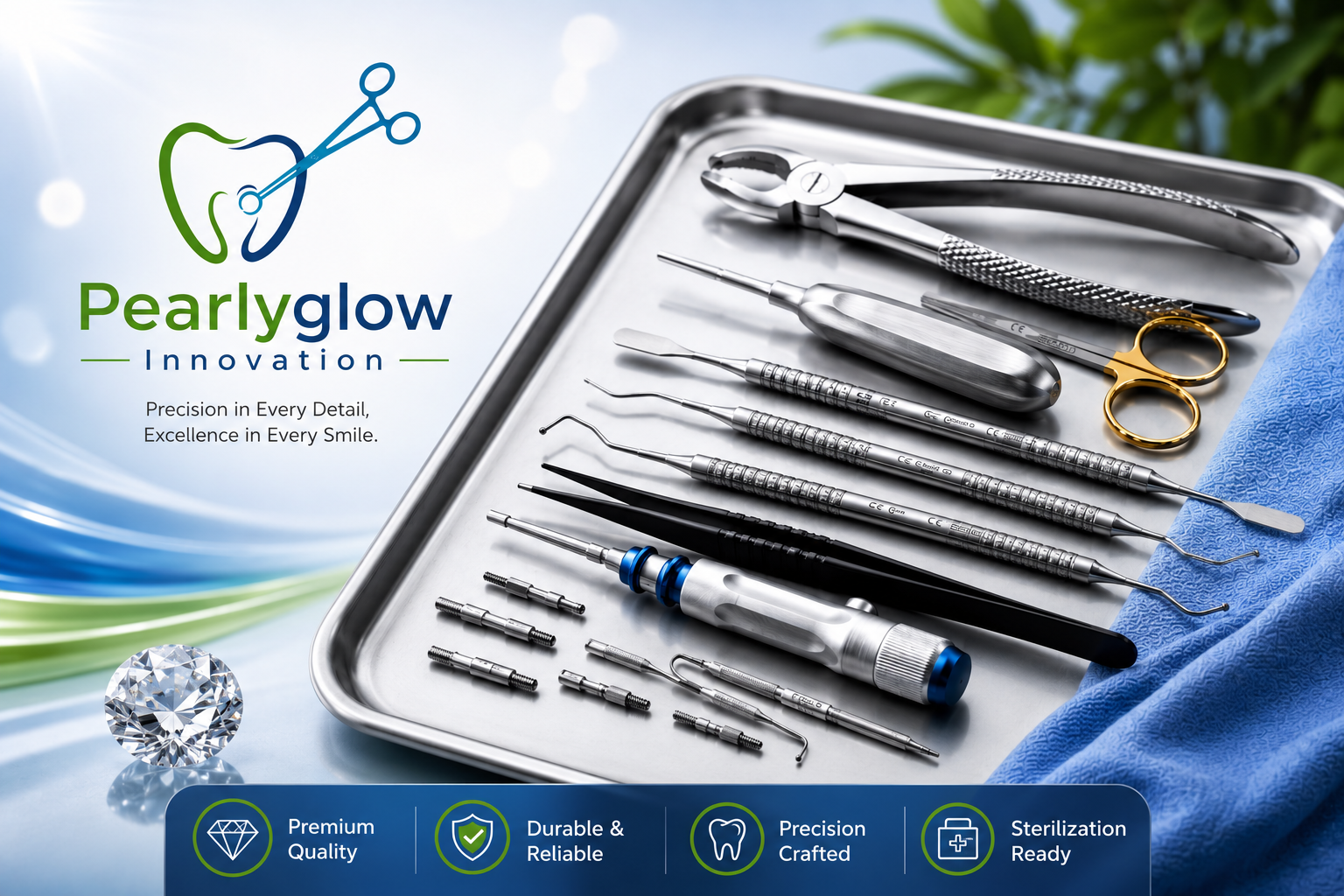
- Extraction forceps — heavier construction and thicker beaks typically support 1,000 or more cycles when forged and properly maintained Clinics looking to standardise their surgical setup can view our extraction instrument kits designed for routine and surgical procedures (Check here).
- Surgical dental elevators — similar construction to forceps, generally supporting a comparable cycle range under correct handling.
- Composite filling instruments — finer working tips are more sensitive to wear, often showing tip degradation before the base metal itself fails f or procedures requiring controlled root elevation, explore PearlyGlow's surgical dental elevators available in multiple patterns (Check here)
- Cement spatulas — flat blade geometry with fewer stress points tends to hold consistency across a long cycle life if properly forged.
- Periodontal instruments — finer, more delicate designs generally have a shorter realistic cycle life than heavier surgical tools.
- Implant surgical instruments — precision components with tight tolerances are especially sensitive to poor cleaning or improper drying between cycles.
These figures depend heavily on manufacturing quality and maintenance, so they should be treated as general expectations rather than fixed guarantees for any specific product.
Maintenance Habits That Extend Autoclave Cycle Life
Manufacturing quality sets the ceiling, but daily maintenance habits determine whether an instrument reaches anywhere near that ceiling in practice. A few consistent habits make a measurable difference over an instrument's working life.
Ultrasonic Cleaning Before Sterilisation
Ultrasonic cleaning removes organic debris from hinges, serrations, and joints more effectively than manual scrubbing alone, which reduces the corrosive load an instrument carries into each autoclave cycle. Avoid mixing dissimilar metal instruments in the same ultrasonic bath, since this can trigger galvanic corrosion that accelerates surface breakdown.
Complete Drying Before Autoclaving
Residual moisture left on an instrument or inside its sterilisation pouch before autoclaving encourages spotting and early corrosion, even on otherwise corrosion-resistant instruments. A full drying step, where protocol allows it, protects the surface finish across many more cycles than skipping this step.
Correct Storage Between Uses
Storing instruments loose in a drawer allows beaks and tips to chip against each other, which shortens effective cycle life regardless of how well the steel itself resists heat and pressure. A dedicated tray or pouch system protects the working ends between sterilisation cycles.
Routine Visual Inspection
Checking for early pitting, dulling, or hinge play at each cycle catches deterioration before it compromises a procedure, rather than waiting for an instrument to fail outright. This habit also helps a clinic track roughly how many cycles an instrument set has actually gone through over time.
Expert Insight from PearlyGlow Innovations
PearlyGlow Innovations tests its extraction and surgical instrument lines across repeated autoclave cycles during manufacturing, rather than estimating cycle life from steel specification alone. The Black Extraction Forceps in the range is rated for 1,000 or more autoclave cycles without loss of grip texture or beak alignment, based on this testing process.
PearlyGlow Innovations recommends that clinics track approximate cycle counts for high-use instrument sets, particularly in high-volume practices where daily sterilisation frequency accumulates cycles faster than a calendar-based schedule assumes. This approach reflects a simple principle: cycle ratings should be tested and disclosed, not assumed.
Key Takeaways
- Forged surgical-grade instruments typically support 1,000 or more autoclave cycles; cast instruments generally fail earlier.
- Periodontal and other finer instruments have a shorter realistic cycle life than heavier extraction or surgical tools.
- Ultrasonic cleaning and complete drying before autoclaving meaningfully extend an instrument's usable cycle count.
- Storing instruments in a dedicated tray, rather than loose, prevents tip damage that shortens effective cycle life.
- Always request a tested, written autoclave cycle rating from a manufacturer rather than assuming a figure.
About PearlyGlow Innovations
PearlyGlow Innovations is an Indian dental instrument manufacturer and supplier, producing surgical-grade extraction, oral surgery, and restorative instruments for clinics, colleges, and dealer networks across India. The brand tests autoclave cycle ratings during manufacturing rather than estimating them. WhatsApp us at 98505 80345 — just send: "Hi PearlyGlow, please send me the autoclave cycle specification sheet," and we'll respond within 2 hours.
Conclusion
Understanding realistic dental instrument autoclave cycles, and the maintenance habits that protect them, turns instrument replacement from a reactive expense into a planned part of clinic operations. Choosing a forged, tested instrument from a transparent manufacturer, and pairing it with consistent cleaning, drying, and storage habits, gets a clinic the closest to the full cycle life that steel grade and construction make possible.
FAQ
How many autoclave cycles should a good extraction forceps last?
A well-manufactured, forged extraction forceps should withstand 1,000 or more autoclave cycles without losing grip texture or beak alignment. Always request this figure in writing from the manufacturer rather than assuming it from price or appearance.
Do all dental instruments have the same autoclave cycle life?
No, heavier instruments like forceps and elevators generally support more cycles than finer instruments like periodontal probes or composite filling tips. Blade thickness and mechanism complexity both influence realistic cycle expectations.
Does ultrasonic cleaning really extend instrument cycle life?
Yes, ultrasonic cleaning removes organic debris from hinges and serrations more effectively than manual scrubbing, reducing the corrosive load carried into each sterilisation cycle. This is one of the more measurable habits for extending usable instrument life.
Can mixing different metal instruments in one cleaning bath cause damage?
Yes, dissimilar metals cleaned together in the same ultrasonic bath can trigger galvanic corrosion, which accelerates surface breakdown on both instruments. Separating instrument types by metal composition during cleaning avoids this risk.
Why do cast instruments generally have a shorter autoclave cycle life than forged ones?
Cast instruments have a looser internal grain structure that develops fatigue cracking and hinge play faster under repeated heat and pressure exposure. Forged instruments resist this fatigue better due to their denser, compressed grain structure.
How can a clinic track how many autoclave cycles an instrument has been through?
Most clinics estimate this by tracking sterilisation load logs alongside instrument set usage, since individual instruments don't carry a built-in cycle counter. Routine visual inspection alongside this tracking helps catch early wear before it becomes a clinical risk.
Does PearlyGlow Innovations provide tested autoclave cycle ratings for its instruments?
Yes, PearlyGlow Innovations tests its extraction and surgical instrument lines across repeated autoclave cycles during manufacturing and discloses this rating to buyers. WhatsApp 98505 80345 to request the current specification sheet.