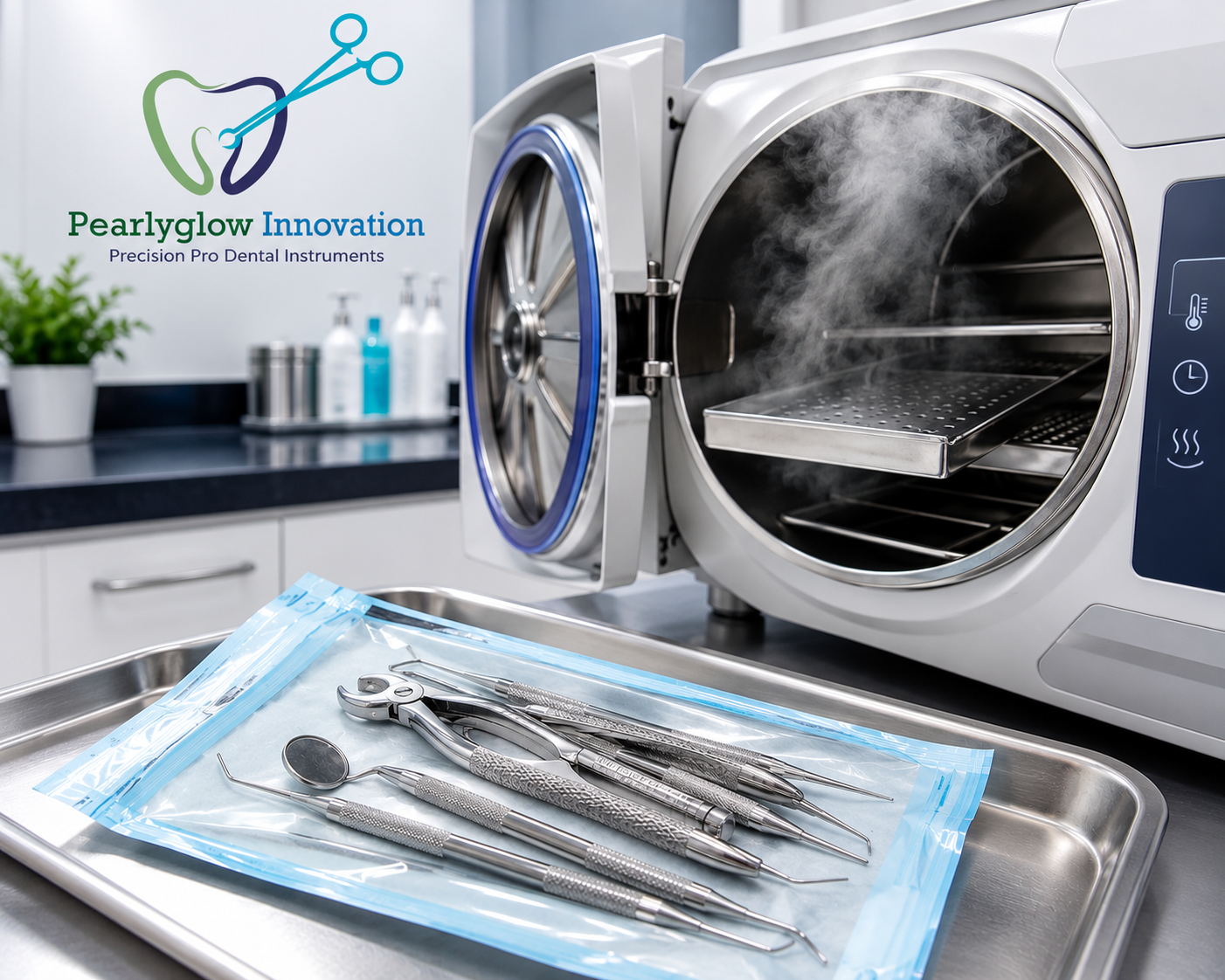
Dental Instrument Sterilization Protocol: Step-by-Step Guide .
Dental Instrument Sterilization Protocol: Step-by-Step Guide
Quick Answer
Correct dental instrument sterilization follows five stages: decontamination, ultrasonic cleaning, rinsing and drying, packaging in sterilization pouches, and steam sterilization in a validated autoclave. Skipping or shortening any stage — a common shortcut in busy Indian clinics — is the leading cause of cross-contamination risk and instrument corrosion.
Every dentist has faced that moment before a procedure: opening a pouch and finding a stain, a spot of rust, or an instrument that simply doesn't look clean enough to trust. A proper dental instrument sterilization protocol is what prevents that moment from ever happening, and it protects both the patient and the clinic's reputation (Check more).
This isn't a topic most dental colleges spend enough time on in practical terms. Most dentists pick up sterilization habits from whoever trained them first, and those habits don't always match current infection control standards. This guide breaks the process into five clear stages, explains where Indian clinics commonly go wrong, and shows how instrument quality itself affects how well sterilization actually works.
Why This Matters for Indian Dentists Specifically
Indian clinics operate under conditions that differ from many Western practices: higher patient volume per chair, shared sterilization areas across multiple dentists, and frequent power fluctuations that affect autoclave cycles. A dental instrument sterilization protocol that assumes ideal, uninterrupted conditions doesn't hold up in this environment.
There's also a market-specific issue with instrument quality itself. A large share of stainless steel dental instruments sold in India through unbranded or low-cost channels use lower-grade steel that corrodes after repeated autoclave cycles (Check here) . Compare this to countries with tighter instrument procurement standards, where clinics are less likely to see rust-related instrument replacement within the first year of use. In India, corrosion after 100–150 cycles is a frequent complaint among clinic owners, largely because the underlying steel grade wasn't built for repeated steam exposure in the first place.
This connects sterilization directly to instrument purchasing. A protocol can be followed perfectly and instruments will still degrade early if the steel itself isn't suited for it.
The Five-Stage Sterilization Protocol
1. Decontamination Instruments must be handled with gloves immediately after use and placed in a designated decontamination area, never left to dry with blood or debris on the surface. Dried debris is harder to remove and increases the risk of incomplete cleaning at later stages.
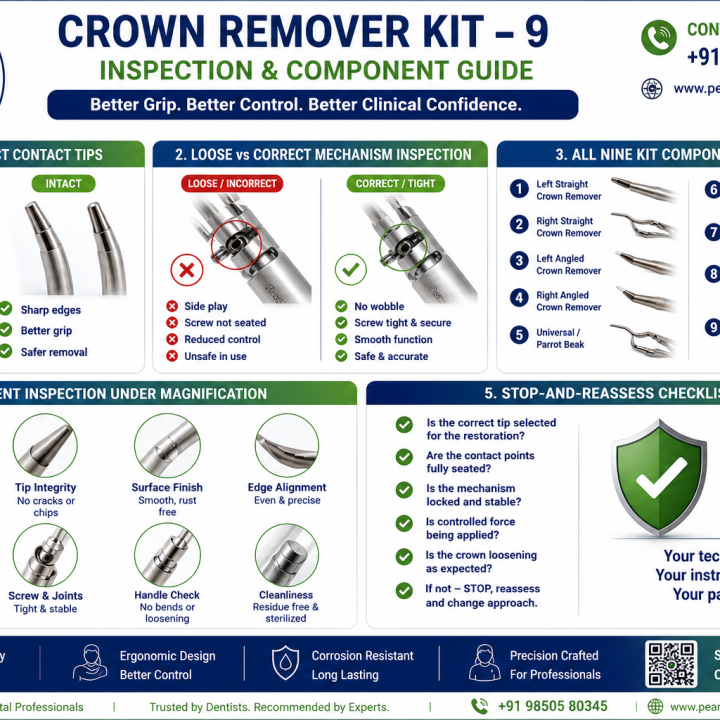
2. Ultrasonic Cleaning An ultrasonic cleaner for dental instruments uses high-frequency sound waves to dislodge debris from hinges, serrations, and beak tips that manual scrubbing often misses. This step is especially important for endodontic instruments sterilisation and periodontal instruments sterilisation (Check more) , where fine tips and narrow grooves trap organic material easily. Run cycles for the manufacturer-recommended time, typically 5–10 minutes.
3. Rinsing and Drying Instrument rinsing under clean running water removes residual detergent and loosened debris before drying. Instrument drying should be thorough and immediate — moisture left on stainless steel dental instruments before packaging is one of the most common causes of spotting and early corrosion. Use a lint-free cloth or a dedicated drying cabinet where available.
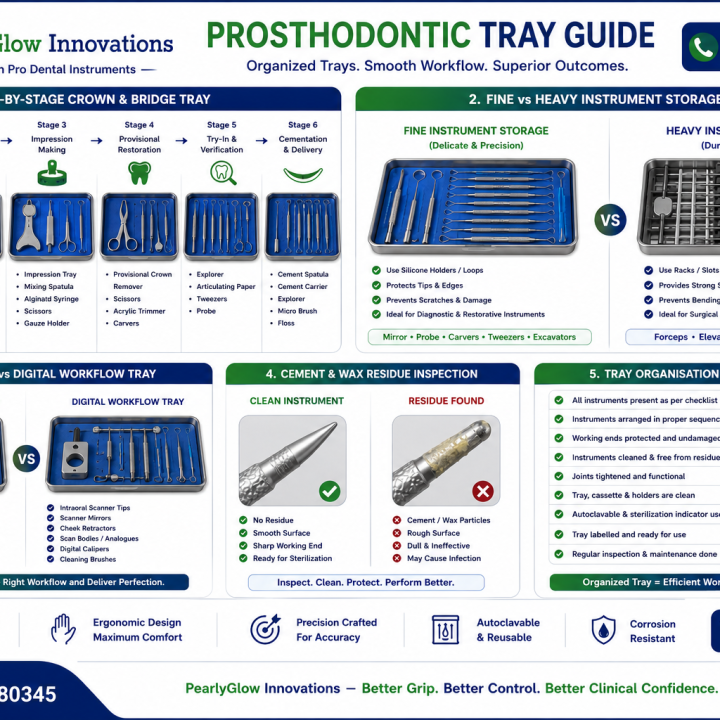
4. Packaging Packaging dental instruments in sterilization pouches keeps them sterile after the autoclave cycle until the moment of use. Pouches must be sealed correctly with visible chemical indicator strips, and orthodontic instruments sterilisation often requires slightly larger pouches to accommodate pliers and wire cutters without bending the seal.
5. Steam Sterilization Steam sterilization in a Class B autoclave remains the standard for dental instrument processing in India, using pressurized steam at 121–134°C depending on the cycle. Always follow the load size and cycle time specified by the autoclave manufacturer, and log every cycle for audit purposes.
Key Takeaways
- Dental instrument sterilization has five non-negotiable stages: decontamination, ultrasonic cleaning, rinsing, drying, and steam sterilization
- Endodontic and periodontal instruments need ultrasonic cleaning due to their fine tips and grooves
- Incomplete drying before packaging is a leading cause of instrument corrosion in Indian clinics
- Instrument decontamination should begin immediately after use, not at the end of the day
- Steel quality determines how many sterilization cycles an instrument can withstand before it degrades (Check more)
About PearlyGlow Innovations
PearlyGlow Innovations manufactures premium dental instruments built specifically to withstand repeated steam sterilization without corrosion or grip loss. The brand has served over 5,000 dentists across India and completed 200 implementations for clinics and institutions worldwide (Check more). PearlyGlow Innovations designs every instrument around one principle: better grip, better control, better clinical confidence.
shop dental surgical instruments WhatsApp us at 98505 80345 — just send: "Hi PearlyGlow, please send me the catalogue." We'll respond within 2 hours.
FAQ
How many times can dental instruments be sterilized?
This depends on the steel grade and coating. Standard stainless steel dental instruments typically withstand 300–500 autoclave cycles before showing wear, while premium rust-resistant coated instruments, such as PearlyGlow Innovations' black-coated forceps, are rated for over 1,000 cycles.
What temperature is used for dental instrument sterilization?
Steam sterilization for dental instruments typically runs between 121°C and 134°C, depending on the autoclave class and cycle type. Class B autoclaves, common in Indian dental practices, generally use 134°C for a faster, more reliable cycle.
Why do my dental instruments rust after a few months?
Rust usually results from incomplete drying before packaging or from lower-grade stainless steel that isn't built for repeated steam exposure. Switching to rust-resistant, coated instruments and ensuring thorough drying before pouching largely resolves this issue.
Is ultrasonic cleaning necessary before autoclaving?
Yes, ultrasonic cleaning removes debris from hinges, serrations, and fine tips that manual brushing cannot reach effectively. Skipping this step increases the risk of organic material surviving the sterilization cycle.
How long should dental instruments stay in the ultrasonic cleaner?
Most manufacturers recommend 5 to 10 minutes per cycle, depending on the instrument type and soil level. Endodontic and periodontal instruments with narrow grooves often need the full recommended time to clean thoroughly.