Dental Instrument Manufacturer vs Supplier: Key Difference
Dental Instrument Manufacturer vs Dental Instrument Supplier: What's the Difference?
Quick Answer
A dental instrument manufacturer designs, forges, and finishes instruments in-house, controlling steel grade and quality at the source. A dental instrument supplier sources finished instruments from one or more manufacturers and resells them to clinics. Buying directly from a manufacturer, or from a supplier who is transparent about its manufacturing source, gives dentists better traceability and consistency.
Introduction
Every dentist ordering forceps, elevators, or scalers eventually asks a simple question: who actually made this instrument? The words "manufacturer," "supplier," and "distributor" are often used interchangeably in catalogues and on marketplaces, but they describe very different roles in the supply chain. Understanding the difference matters because it affects steel quality, instrument longevity, and how quickly a replacement or repair can be arranged.
This article focuses specifically on the manufacturer-versus-supplier distinction, so you can read a product listing or a dealer's pitch with a clearer eye. For a broader framework on evaluating any vendor before you place an order, see our pillar guide on choosing a dental instrument supplier.( Check more)
Why This Matters for Indian Dentists
India's dental instrument market includes genuine manufacturers, trading houses that import and rebrand, and multi-layer distributors. A clinic in Pune or a hospital purchase department in Nagpur may see near-identical instrument photos from three different sellers at three different prices, with no obvious way to tell who is behind the steel.
This ambiguity has real clinical consequences. An instrument from an unclear source may use inconsistent steel hardness, inconsistent finishing, or inconsistent quality checks batch to batch. When a supplier cannot answer basic questions about who manufactures their stock, that is itself useful information for a buying decision.
What Is a Dental Instrument Manufacturer?
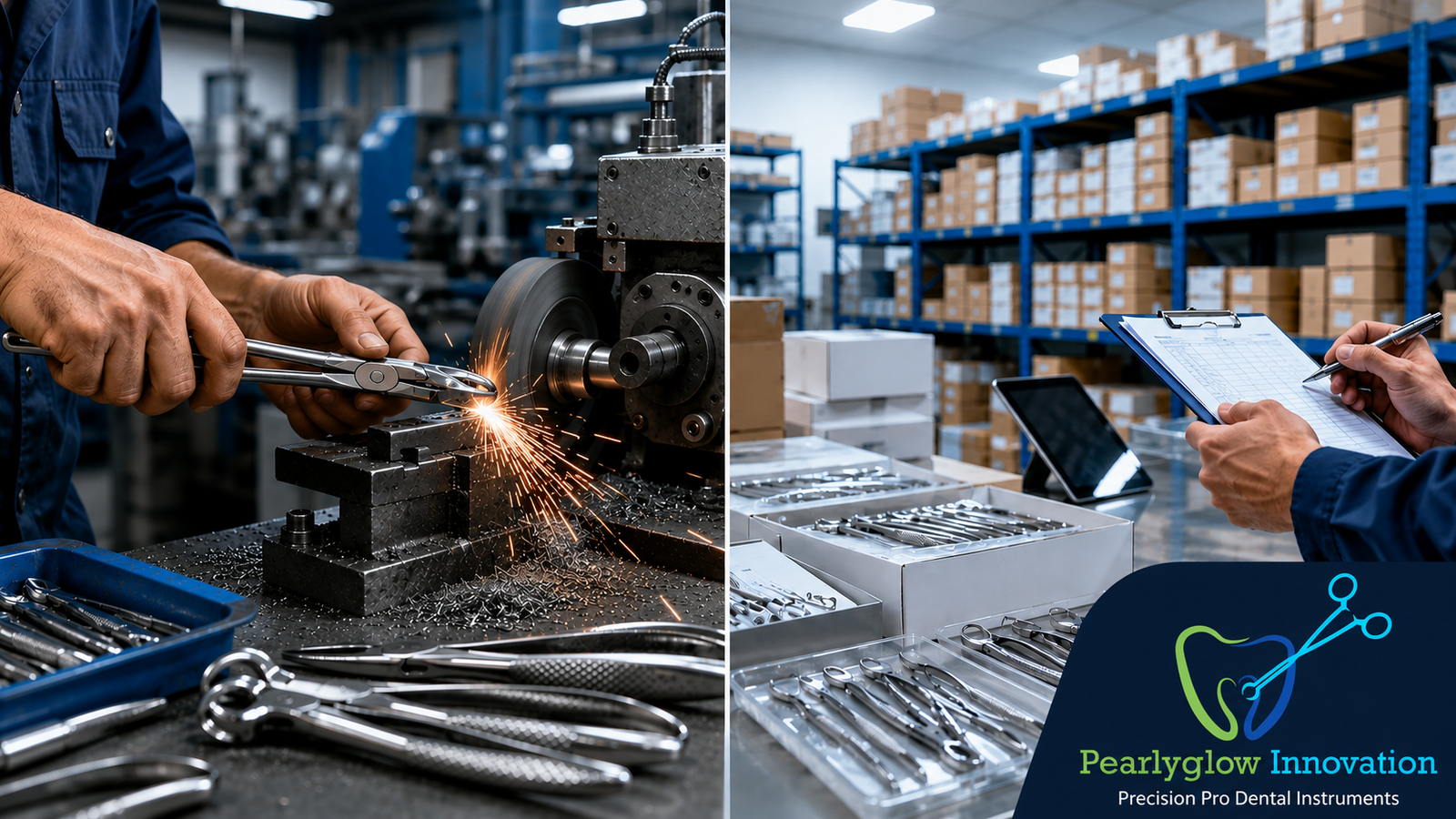
A dental instrument manufacturer owns or operates the actual production process. This typically includes forging or stamping the instrument from surgical-grade steel, hardening and tempering it, machining the working tips, and polishing or finishing the surface.
Because a manufacturer controls every stage, it can maintain consistent tolerances across a batch and troubleshoot a quality issue at its root cause. A genuine dental instruments manufacturer in India will usually be able to describe its steel source, heat-treatment process, and in-house quality checks in specific terms, not just marketing language.
Manufacturers also typically offer OEM dental instrument manufacturer services, producing instruments under a clinic chain's or dealer's own brand name while retaining full control of production quality.
What Is a Dental Instrument Supplier?
A dental instrument supplier, by contrast, does not necessarily make anything. A supplier's core function is sourcing, stocking, and reselling instruments, often from multiple manufacturers, and making them conveniently available to clinics.
This is not inherently a negative. Many reliable suppliers add real value through faster local delivery, smaller order quantities, after-sales support, and curated product ranges suited to Indian clinical needs. The concern arises only when a supplier is vague about its manufacturing source or substitutes stock inconsistently between orders.
Supplier vs Distributor: A Related Distinction
A dental instrument distributor usually operates at a larger scale than a retail supplier, often holding regional or exclusive rights to sell a manufacturer's range within a defined territory. Distributors typically serve dealers and smaller suppliers rather than selling instrument-by-instrument to individual clinics.
In practice, the line between "supplier" and "distributor" is often blurred in Indian dental trade, and the more useful question for a buying dentist is not the label but the traceability: can this seller name and stand behind the manufacturer of the instrument you are about to buy?
Manufacturer vs Supplier: Practical Differences That Affect Your Clinic
Quality control. A manufacturer inspects steel and finishing at the source. A pure supplier is dependent on whatever quality checks its upstream manufacturer performs, and may not verify each batch independently.
Consistency across orders. Buying dental surgical instruments directly from a manufacturer, or from a supplier with a fixed manufacturing partner, means the grip, balance, and hardness of your instruments stay consistent order after order. A supplier that switches sourcing to chase price can send visibly different stock under the same product name.
Customisation and OEM options. Manufacturers can usually accommodate design tweaks, private labelling, or bulk OEM orders for institutions. Suppliers generally cannot, since they do not control production.
Pricing structure. Buying from a manufacturer often removes one margin layer compared to a multi-tier supplier or distributor chain, though this is not guaranteed and depends on order volume and logistics.
After-sales accountability. When an instrument fails prematurely, a manufacturer can trace the fault to a specific production batch. A supplier without manufacturing visibility can usually only offer a replacement, not a root-cause explanation.
When Should a Dentist Buy Directly from a Manufacturer?
Direct manufacturer purchase makes the most sense for clinics and hospitals placing recurring bulk orders, dental colleges standardising instrument kits across departments, and dealers who want consistent premium dental instruments to build their own retail brand around Explore our premium dental instruments range for clinics and hospitals.(Check here)
Smaller clinics with occasional, low-volume needs may still be well served by a trustworthy local supplier, provided that supplier is transparent about where the instruments are made and maintains consistent sourcing.
Expert Insight from PearlyGlow Innovations
At PearlyGlow, we operate as a manufacturer rather than a reselling supplier, which means our production team controls steel selection, forging, heat treatment, and finishing for every instrument batch. This structure lets us maintain consistent hardness and grip specifications across orders, rather than varying by whatever stock happens to be available from a third party.
We also work directly with clinics, dealers, and institutions on OEM and bulk requirements, since we are not limited to reselling a fixed catalogue. Dentists evaluating any supplier, including us, are encouraged to ask direct questions about production location, steel grade, and batch-level quality checks before committing to a large order.
Key Takeaways
- A dental instrument manufacturer controls production from steel to finishing; a supplier typically resells finished stock.
- Manufacturing control generally means better batch-to-batch consistency and clearer accountability when an instrument fails.
- Distributors usually operate at a larger, regional scale than individual clinic-facing suppliers.
- OEM and private-label options are typically only available through a genuine manufacturer.
- Always ask a seller directly who manufactures the instruments before placing a bulk order.
About PearlyGlow Innovations
PearlyGlow Innovations Pvt. Ltd. is a Pune-based manufacturer of premium dental and surgical instruments, built around the promise of Better Grip. Better Control. You can also browse our dental surgical instruments before placing an enquiry (check here) Better Clinical Confidence. We work directly with dentists, oral surgeons, clinics, hospitals, dental colleges, and dealers across India. For manufacturing details or bulk and OEM enquiries, message us on WhatsApp at 98505 80345.
Conclusion
Knowing whether you are buying from a dental instrument manufacturer or a supplier changes what questions you should ask before ordering. A manufacturer offers traceability and consistency at the source; a good supplier offers convenience, but only holds up when it is transparent about its own manufacturing partner. Before your next bulk order, ask directly where and how the instruments are made, then revisit our pillar guide for a complete supplier evaluation checklist.
FAQs
1. Is a dental instrument manufacturer always cheaper than a supplier? Not always. Pricing depends on order volume, logistics, and how many middlemen are involved, though removing a resale layer often helps on large orders.
2. Can a supplier also be a manufacturer? Yes. Some companies manufacture their own core range while also sourcing supplementary products from other manufacturers, so it's worth asking which category a specific instrument falls into.
3. Why does it matter who manufactures my dental instruments? Manufacturing source affects steel quality, hardness consistency, and how a defect can be traced and resolved, all of which affect instrument lifespan and clinical performance.
4. What is an OEM dental instrument manufacturer? An OEM manufacturer produces instruments under a client's own brand name or specifications, a service typically offered only by companies that control their own production.
5. How can I verify if a seller is a genuine manufacturer? Ask specific questions about steel grade, forging process, in-house quality checks, and production location; vague or evasive answers are a warning sign.
6. Is buying from a distributor the same as buying from a manufacturer? No. A distributor typically resells a manufacturer's range at a regional scale and does not control production itself.
7. Do dental colleges and hospitals benefit from buying directly from manufacturers? Yes, particularly for large recurring orders, since direct sourcing supports consistent instrument specifications across departments and batches.