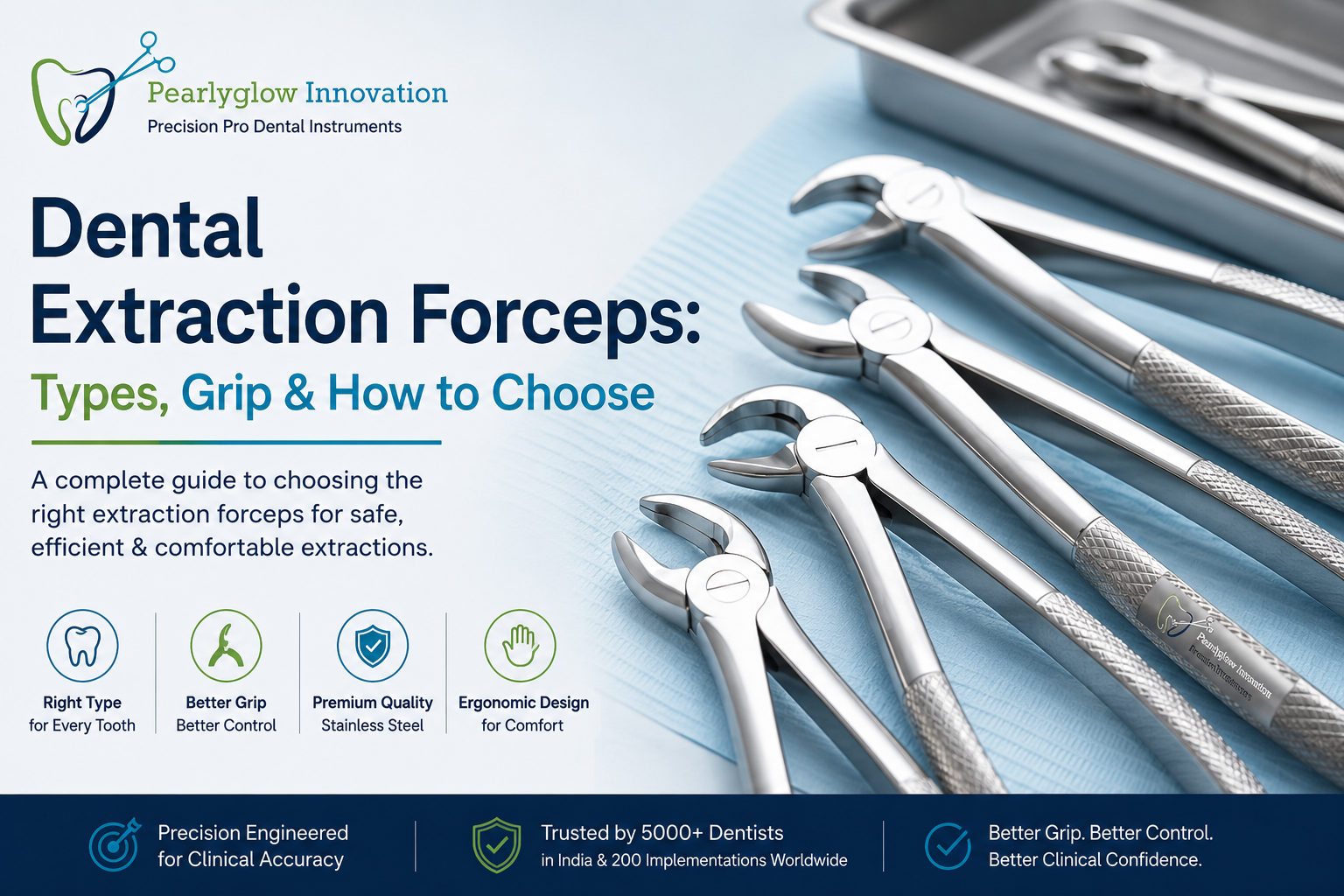
Dental Extraction Forceps: Types & Buying Guide
Dental Extraction Forceps: Types, Grip & How to Choose
Quick Answer
Dental extraction forceps are specialized instruments used to grasp and remove teeth safely during routine and surgical extractions. Choosing the right forceps depends on the tooth being extracted, the beak design, handle grip, and manufacturing quality. Well-designed forceps improve control, reduce operator fatigue, and support predictable clinical outcomes.
Introduction
Dental extraction forceps are among the most frequently used instruments in oral surgery and general dentistry. Selecting the right forceps is not only about choosing the correct pattern but also about ensuring the instrument provides reliable grip, precise handling, and long-term durability (Check more).
Every extraction presents different anatomical challenges. Factors such as tooth position, root morphology, and access determine which tooth extraction forceps should be used. Understanding the different forceps types and their design helps dentists perform extractions more efficiently while minimizing unnecessary trauma.
Why This Matters for Indian Dentists
Tooth extractions remain one of the most common procedures performed in Indian dental practices. General clinics typically perform a higher volume of routine extractions than specialty oral surgery centers, making instrument durability and consistency especially important.
Frequent sterilization, varying patient loads, and long clinical sessions place significant demands on dental forceps. Instruments manufactured with corrosion-resistant stainless steel, accurate beak alignment, and ergonomic handles generally maintain their performance better over time than lower-quality alternatives.
Practices that routinely perform wisdom tooth surgery, pediatric dentistry, or complex extractions often require a wider range of dental extraction forceps types than clinics focused mainly on routine procedures.
What Are Dental Extraction Forceps?
Dental extraction forceps are hand instruments designed to grasp teeth securely and apply controlled forces during extraction. Their design allows clinicians to deliver pressure in a way that minimizes unnecessary damage to surrounding tissues while improving operator control.
Each forceps is engineered for a specific tooth group or clinical situation. Differences in beak design, hinge alignment, and handle geometry influence how effectively the instrument engages the tooth.
A standard dental forceps set usually includes instruments for anterior teeth, premolars, molars, retained roots, pediatric patients, and surgical extractions.
Dental Extraction Forceps Types
Selecting the appropriate forceps begins with understanding their intended clinical use.
1. Upper Molar Forceps
Upper molar forceps are designed to engage the anatomy of maxillary molars. Their beaks are shaped to fit around the furcation area, allowing stable engagement during extraction.
Accurate beak adaptation helps improve grip while reducing unnecessary movement during the procedure.
2. Lower Molar Forceps
Lower molar forceps are designed for mandibular molars, where root anatomy and bone density differ from the upper jaw.
These forceps provide greater mechanical advantage while maintaining controlled force application throughout extraction.
3. Universal Extraction Forceps
Universal extraction forceps can be used across multiple tooth positions and are commonly included in every general practice.
Although versatile, they should not replace tooth-specific forceps when anatomical precision is required.
4. Pediatric Dental Forceps
Primary teeth require instruments with smaller working ends and lighter construction.
Pediatric dental forceps are designed to provide controlled removal while minimizing trauma to developing tissues.
5. Wisdom Tooth Extraction Forceps
Posterior access during third molar removal often requires specialized wisdom tooth extraction forceps.
These instruments improve access in confined surgical areas and assist with difficult extractions.
6. Surgical Extraction Forceps
Some procedures require surgical extraction forceps designed for retained roots, fractured teeth, or complex extractions.
These instruments complement elevators and other dental extraction instruments used during oral surgery (Check more).
How to Choose Dental Extraction Forceps
Choosing dental extraction forceps involves evaluating both clinical suitability and manufacturing quality.
1. Select the Correct Forceps Pattern
Choose forceps designed specifically for the tooth being extracted. Proper anatomical matching improves stability and reduces unnecessary force.
2. Evaluate Beak Design
The beak design should provide secure engagement without slipping. Well-machined beaks improve precision during tooth removal.
3. Check Handle Grip
An ergonomic handle grip improves comfort during long procedures and helps maintain control throughout extraction.
4. Consider Manufacturing Quality
A reliable dental extraction forceps manufacturer maintains consistent dimensions, accurate hinge alignment, and high-quality finishing across production batches (Check more).
5. Verify Stainless Steel Quality
High-quality stainless steel improves corrosion resistance and allows the instrument to withstand repeated sterilization cycles without compromising performance (Check more).
Common Mistakes When Buying Dental Forceps
Many buyers focus primarily on appearance or price.
Instead, evaluate the following:
- Beak precision
- Handle balance
- Joint alignment
- Surface finishing
- Corrosion resistance
- Manufacturing consistency
- Availability of replacement instruments
Selecting forceps based on these factors helps improve long-term clinical reliability while reducing replacement frequency.
Expert Insight from PearlyGlow Innovations
PearlyGlow Innovations has worked closely with dentists, oral surgeons, hospitals, and dental institutions to understand the practical demands of daily extraction procedures. Having served over 5,000 dentists and completed more than 200 implementations worldwide, the company has gained valuable insights into how forceps design affects clinical performance. Feedback from practitioners consistently highlights the importance of accurate beak alignment, balanced handle geometry, corrosion-resistant stainless steel, and consistent manufacturing quality. Rather than focusing only on appearance, PearlyGlow Innovations evaluates extraction forceps based on grip stability, handling comfort, and long-term durability under repeated sterilization, helping clinicians achieve predictable performance in everyday practice.
Key Takeaways
- Dental extraction forceps should be selected according to tooth anatomy and clinical requirements.
- Beak design, hinge alignment, and ergonomic handles directly influence extraction control.
- High-quality stainless steel improves corrosion resistance and instrument longevity.
- A complete dental forceps set helps practices manage routine, pediatric, and surgical extractions efficiently.
- Choosing a reliable dental extraction forceps manufacturer supports consistent clinical performance over time.
About PearlyGlow Innovations
PearlyGlow Innovations Pvt. Ltd. manufactures premium dental instruments for dentists, oral surgeons, hospitals, dental colleges, and distributors. Guided by the promise of Better Grip. Better Control. Better Clinical Confidence., the company has served over 5,000 dentists and completed more than 200 implementations worldwide.
check products or For product catalogues, pricing, or dealer enquiries, WhatsApp 98505 80345.
Conclusion
Selecting the right dental extraction forceps is essential for safe, efficient, and predictable tooth removal. Understanding different dental extraction forceps types, evaluating beak design, and choosing instruments with ergonomic handles and corrosion-resistant construction help improve clinical outcomes. When purchasing new instruments, dentists should also evaluate the experience and manufacturing standards of a dental extraction forceps manufacturer to ensure long-term consistency and reliability in daily practice.
Frequently Asked Questions
What are dental extraction forceps used for?
Dental extraction forceps are used to grasp, loosen, and remove teeth during routine and surgical extraction procedures. Different forceps are designed for specific tooth positions to improve control and minimize trauma.
What are the different dental extraction forceps types?
Common dental extraction forceps types include upper molar forceps, lower molar forceps, universal extraction forceps, pediatric dental forceps, wisdom tooth extraction forceps, and surgical extraction forceps. Each type is designed for a particular clinical application.
Why is beak design important in extraction forceps?
The beak design determines how securely the forceps engage the tooth. Properly machined beaks improve grip, reduce slippage, and allow controlled force application during extraction.
What should I look for in a dental extraction forceps manufacturer?
Look for manufacturers that use high-quality stainless steel, maintain accurate beak alignment, ensure consistent production quality, and design ergonomic handles suitable for repeated clinical use.
How do upper molar and lower molar forceps differ?
Upper molar forceps are shaped to engage the anatomy of maxillary molars, while lower molar forceps are designed for mandibular molars, where root configuration and bone density require a different forceps design.
How long do dental forceps last?
With proper maintenance, cleaning, lubrication, and sterilization, high-quality dental forceps can remain clinically effective for many years. Regular inspection helps identify wear or hinge damage before performance is affected.