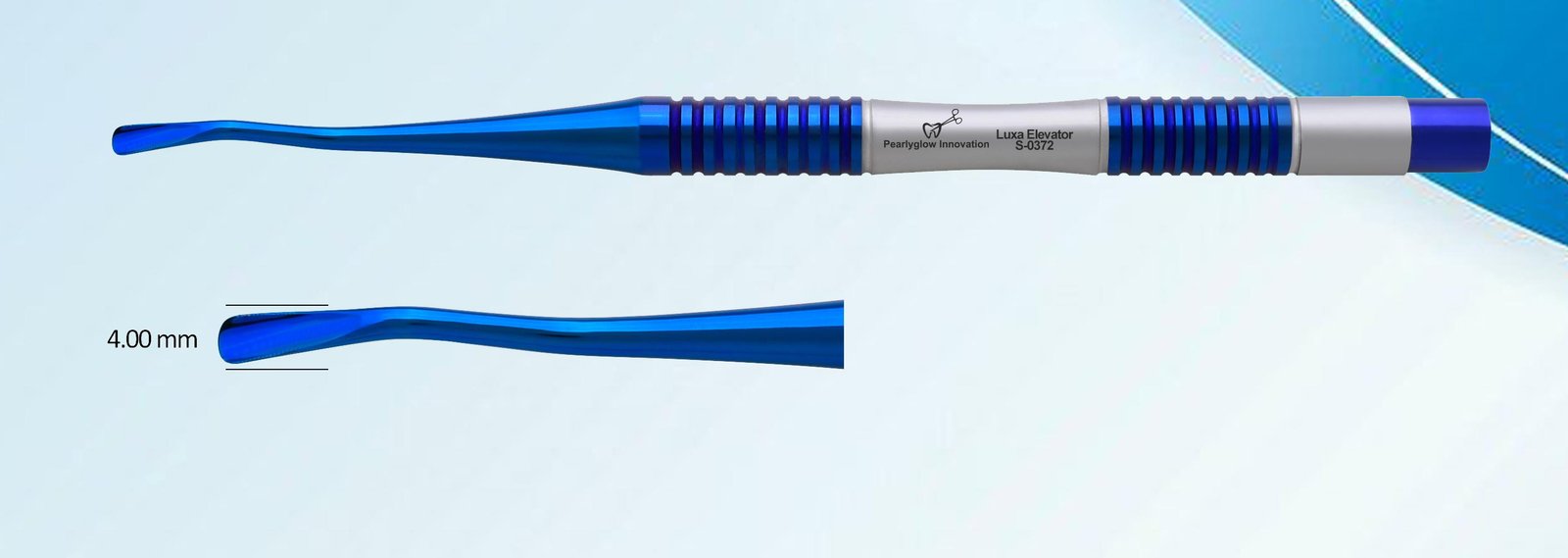
Dental Elevators Manufacturer Guide | PearlyGlow
Dental Elevators Manufacturer Guide: Elevators vs Luxators — What's the Difference?
Quick Answer
Dental elevators use leverage against bone to lift a tooth from its socket, while luxators use a thin, sharp blade to sever the periodontal ligament before elevation. A reliable dental elevators manufacturer offers both instrument types, since most extractions need luxation first and elevation second, not one tool doing both jobs.
Reaching for the wrong instrument during a surgical extraction can turn a straightforward case into one with unnecessary bone stress. Understanding what a proper dental elevators manufacturer actually supplies — distinct elevator and luxator designs, not a single hybrid tool — makes that choice easier before you're mid-procedure For a broader overview of instrument quality and selection, read our complete guide to premium dental instruments (Check more).
This guide breaks down the mechanical difference between the two, when each is indicated, and how to build a working set for routine and surgical extractions.
Why This Matters for Indian Dentists
Indian dental colleges teach luxation and elevation as sequential steps, yet many clinics stock only a small set of elevators and skip dedicated luxators to reduce initial instrument cost. This gap shows up clinically as more force applied through elevation alone, which increases the risk of root fracture or alveolar bone damage.
Third molar and impacted tooth cases are especially common in general Indian practice, given the high patient volume many urban clinics manage. Without a proper luxator step, these more complex extractions place disproportionate stress on both the instrument and the patient's surrounding bone.
Building a set that includes both instrument types, sized to your case mix, reduces procedure time and lowers complication risk across routine and surgical extractions alike.
The Mechanical Difference Between Elevators and Luxators
A dental elevator works on the principle of leverage, using a wedge-shaped or angled blade inserted between the tooth root and surrounding bone to lift the tooth outward. The mechanical advantage comes from the elevator's blade acting as a lever against a bone fulcrum, which requires a controlled, deliberate motion rather than force alone.
A luxator, by contrast, has a thinner, sharper blade designed to cut and stretch the periodontal ligament fibres holding the tooth in its socket. Luxators are not meant to lever against bone the way elevators are, and using one that way risks blade damage and reduced cutting precision on future use.
When to Use a Luxator First
Luxators are typically used at the start of an extraction, working around the tooth's circumference to sever ligament attachment before any elevation begins. This step alone often loosens a tooth enough that elevation requires significantly less force.
When to Switch to an Elevator
Once ligament attachment is sufficiently reduced, an elevator takes over to complete the lift using controlled leverage against the alveolar bone. Skipping the luxation step and going straight to heavy elevation is a common source of unnecessary root fracture in routine extractions.
Surgical Elevators and Luxators for Complex Cases
Third molar extraction and other impacted tooth cases call for a different instrument profile than routine single-rooted extractions. Surgical dental elevators used for impacted teeth typically have narrower, more angled blades designed to access limited surgical space around a partially erupted tooth.
Surgical dental luxators for these cases need finer blade tips to work into tighter ligament spaces without excess force Clinics performing wisdom tooth surgery can view surgical luxators for impacted extractions to choose the right blade designs (Check here). A dedicated impacted-tooth set, separate from a routine extraction set, protects both instrument longevity and clinical outcomes in wisdom tooth extraction cases.
Root fracture prevention during these procedures depends heavily on correct sequencing — luxation to reduce ligament resistance, then elevation with the appropriate angled blade for the access available.
How to Choose Elevators and Luxators for Your Practice
Match your instrument set to your actual surgical caseload rather than buying a single generic pair of each. A general practice handling mostly routine extractions needs a small, straight elevator and luxator set, while a practice regularly performing impacted tooth extraction needs angled surgical variants as well.
- Identify how often your practice handles third molar or impacted cases.
- Confirm blade angle options match the access limitations you typically face.
- Check that luxator blades hold a fine edge across repeated sterilisation cycles.
- Verify elevator handles provide secure grip under gloved, damp conditions.
- Add surgical variants only once your routine set is fully covered.
Expert Insight from PearlyGlow Innovations
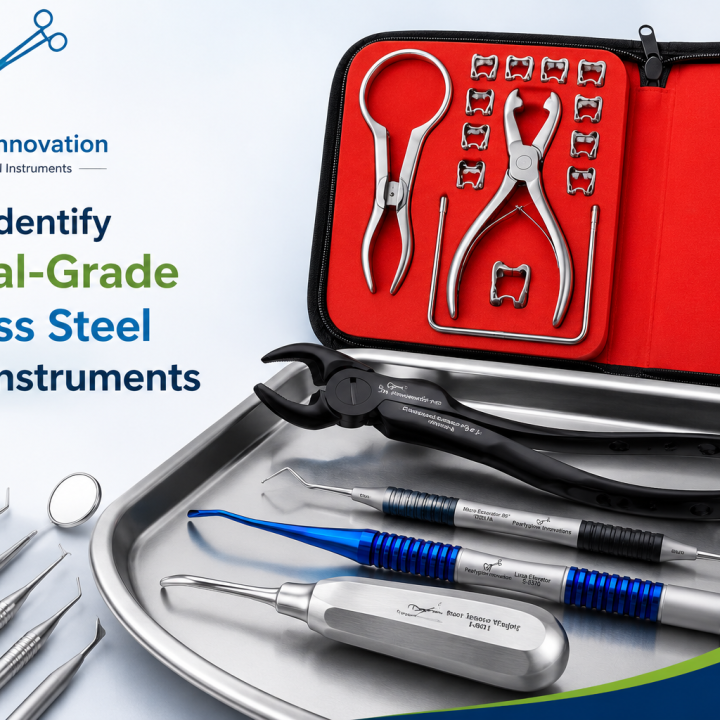
PearlyGlow Innovations manufactures both elevator and luxator ranges using forged surgical grade stainless steel, with straight and angled blade options for routine and surgical extraction cases You can browse PearlyGlow's dental elevators range to compare available patterns and sizes (Check here). Premium dental elevators in this range are shaped to maintain a stable lever point against bone, while premium dental luxators use a thinner ground edge to work ligament fibres without excess force.
Each instrument is designed around the same sequencing principle taught in Indian dental curricula — luxation before elevation — so clinicians using PearlyGlow Innovations' range don't need to adapt technique to mismatched tools. Both instrument types are tested for edge retention across repeated autoclave cycles rather than one-time sharpness alone.
Key Takeaways
- Elevators lift teeth using leverage against bone; luxators cut and stretch ligament fibres before elevation begins.
- Skipping the luxation step increases the force needed during elevation and raises root fracture risk.
- Impacted and third molar extraction cases need angled surgical variants, not routine straight blades.
- A dependable dental elevators manufacturer supplies both instrument types, not a single hybrid design.
- Match your elevator and luxator set to your actual surgical caseload, adding surgical variants as needed.
About PearlyGlow Innovations
PearlyGlow Innovations is an Indian dental instruments manufacturer supplying surgical-grade elevators, luxators, and extraction instruments to clinics, colleges, and dealer networks. The brand's instrument range is built around one principle: better grip, better control, better clinical confidence. WhatsApp us at 98505 80345 — just send: "Hi PearlyGlow, please send me the elevators and luxators catalogue," and we'll respond within 2 hours.
Conclusion
Elevators and luxators serve different mechanical purposes, and treating them as interchangeable is a common source of unnecessary force and root fracture risk. Working with an established dental elevators manufacturer that supplies both instrument types, in straight and angled variants, gives a practice the right tool for routine extractions and impacted tooth extraction cases alike.
FAQ
What is the main difference between an elevator and a luxator?
An elevator lifts a tooth using leverage against surrounding bone, while a luxator cuts and stretches the periodontal ligament before elevation begins. Most extractions use both instruments in sequence, luxator first, elevator second.
Can a luxator be used the same way as an elevator?
No, using a luxator to lever against bone the way an elevator does can damage its thin blade and reduce cutting precision on future use. Each instrument is designed for a distinct mechanical role.
Why do third molar extractions need surgical elevators and luxators?
Third molar and impacted tooth cases often have limited surgical access, requiring narrower, more angled blades than routine straight instruments provide. A dedicated surgical set improves control in these tighter spaces.
Does skipping luxation increase the risk of root fracture?
Yes, skipping luxation and relying on elevation alone increases the force applied to the root, raising the risk of fracture during extraction. Luxation first reduces the resistance elevation needs to overcome.
How many elevator and luxator patterns does a general practice need?
A general practice typically needs a small straight elevator and luxator set for routine cases, with angled surgical variants added if impacted extractions are common. Case mix should guide the exact range.
Are premium dental elevators different from standard ones in construction?
Yes, premium dental elevators use forged surgical grade stainless steel for a stronger lever point, compared to cast alternatives that fatigue faster under repeated bone-leverage stress. Blade angle precision also tends to be more consistent in forged instruments.
Does PearlyGlow Innovations supply surgical elevator and luxator sets to colleges?
Yes, PearlyGlow Innovations supplies routine and surgical elevator and luxator ranges to dental colleges, PG programs, and dealer networks. WhatsApp 98505 80345 with your requirement for current availability and pricing.