Corrosion-Resistant Dental Instruments | PearlyGlow
Corrosion-Resistant Dental Instruments: Why They Matter in Indian Clinics
Quick Answer
Corrosion-resistant dental instruments matter in India because high humidity across most regions, combined with repeated autoclave heat cycles, accelerates rust and pitting on instruments that lack proper steel grade and passivation. Forged stainless steel dental instruments with a correctly treated surface resist this breakdown far longer than lower-grade or poorly finished alternatives.
An instrument that spots or dulls within a year isn't unlucky — it's usually a sign the steel grade or surface treatment wasn't suited to the conditions it's actually working in. Corrosion-resistant dental instruments aren't a marketing add-on in India; they're a practical response to a climate that punishes instruments not built for it.
This guide explains why corrosion happens, what actually prevents it, and how to evaluate whether your current instruments are holding up the way they should (Check more).
Why This Matters for Indian Dentists Add repeated autoclave cycles (Check more)
India's humidity profile varies sharply by region and season, and this directly affects how fast an untreated or poorly finished instrument corrodes. Coastal cities such as Mumbai average around 75% relative humidity year-round, climbing to roughly 89% during the July monsoon peak, while interior and northwestern regions can drop below 30–40% relative humidity during the dry season.
This means a clinic in Mumbai, Chennai, or Kochi faces meaningfully harsher corrosion conditions than a clinic in Jaipur or Delhi during the dry months, even though both may be buying instruments from the same supplier. Add repeated autoclave cycles, which expose instruments to heat and moisture on top of ambient humidity, and the case for genuinely rust-resistant dental instruments becomes a practical operating requirement rather than a preference.
Clinics without climate-controlled sterilisation rooms, which describes a large share of smaller Indian practices, face this risk more acutely and benefit most from instruments engineered specifically to resist it.
What Actually Causes Corrosion in Dental Instruments
Corrosion isn't random — it develops through a specific set of conditions that repeated clinical use creates. Understanding the mechanism helps explain why some instruments hold up for years while others fail within months.
Chloride Exposure and Pitting
Saline, blood, and cleaning agents all introduce chloride ions, which attack the protective oxide layer on stainless steel and initiate pitting corrosion, particularly at hinges and joints where moisture lingers. Even surgical grade dental instruments can develop pitting if this protective layer wasn't properly formed during manufacturing.
Incomplete Passivation
Passivation is a chemical treatment that removes free iron from the steel surface and strengthens the natural oxide layer that gives stainless steel its corrosion resistance. Instruments that skip or shortcut this process during manufacturing look identical to properly passivated ones initially, but corrode significantly faster under repeated humidity and heat exposure.
Galvanic Corrosion from Mixed Metals
Cleaning dissimilar metal instruments together in the same ultrasonic bath can trigger galvanic corrosion, where one metal accelerates the breakdown of another in contact with it. This is an avoidable cause of premature corrosion that has nothing to do with instrument quality itself.
Signs of Instrument Corrosion to Watch For
Early corrosion often shows up subtly before it becomes an obvious problem. Checking for these signs at each sterilisation cycle catches deterioration before it compromises a procedure.
- Discoloured spots — any darkening or staining on the metal surface, even faint, signals the oxide layer has been compromised.
- Visible pitting — small pinpoint depressions, usually starting near hinges or joints where moisture collects longest.
- Rough or dull surface texture — a loss of the original mirror finish often precedes visible pitting.
- Reduced grip on knurled handles — corrosion at a textured grip surface smooths it out over time, reducing tactile control.
- Stiffness or grinding in hinged joints — corrosion inside a hinge mechanism affects movement before it's visible externally.
What Prevents Corrosion in Well-Made Instruments
Three manufacturing factors determine whether an instrument resists corrosion effectively over its working life. Genuine surgical grade dental instruments start with a steel composition specifically chosen for chromium content, which forms the passive oxide layer responsible for corrosion resistance.
Proper passivation treatment during manufacturing strengthens that oxide layer further, and this step should be confirmed with any manufacturer rather than assumed. Forged stainless steel dental instruments also tend to resist corrosion better than cast alternatives, since a denser grain structure gives chloride ions fewer microscopic pathways to penetrate.
A well-executed mirror finish adds a final layer of protection by reducing surface porosity, making it harder for moisture and organic material to lodge in the surface between cleanings.
Expert Insight from PearlyGlow Innovations
PearlyGlow Innovations manufactures its instrument range using forged stainless steel with a full passivation process applied during production, rather than relying on steel grade alone for corrosion protection. Every instrument line is tested through repeated autoclave and humidity exposure cycles before being classified as corrosion-resistant (Check more) , reflecting the specific conditions Indian clinics operate in.
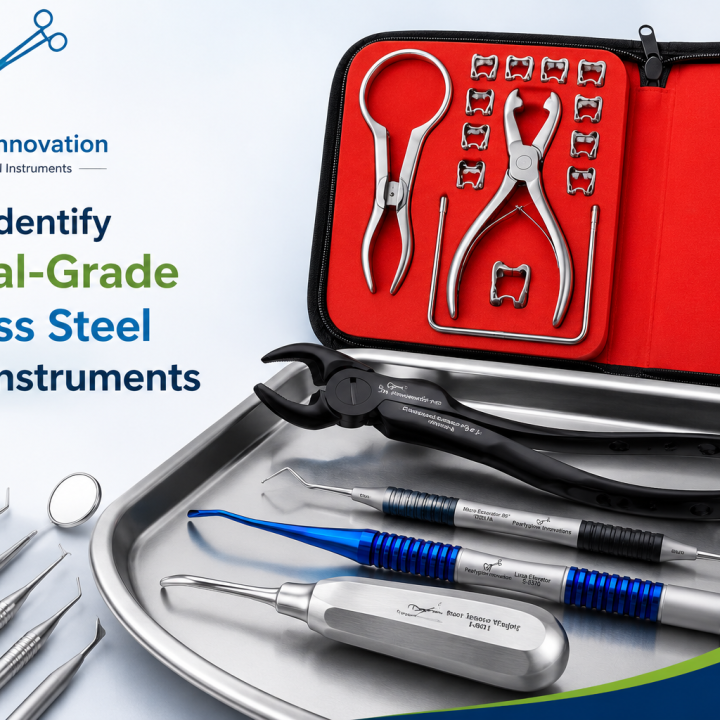
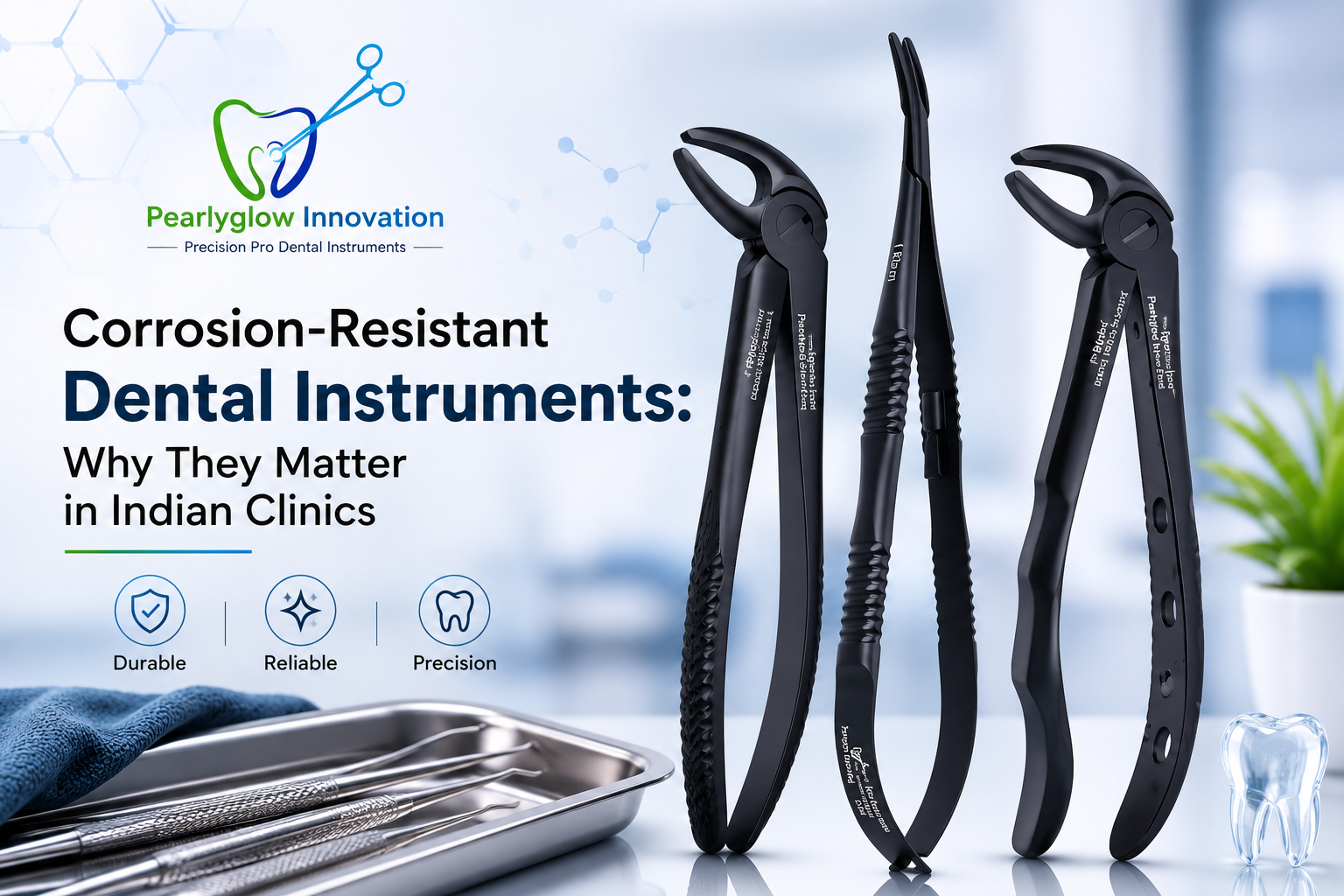
The brand's Black Extraction Forceps adds a further rust-resistant coating over this base treatment, aimed specifically at clinics without climate-controlled sterilisation rooms (Check more) . PearlyGlow Innovations documents its passivation and testing process for buyers who want to verify corrosion resistance claims before purchasing rather than after an instrument fails.
Key Takeaways
- Coastal Indian cities can see relative humidity above 85% during monsoon, significantly accelerating instrument corrosion risk.
- Pitting corrosion typically starts at hinges and joints where moisture lingers longest after cleaning.
- Passivation, not steel grade alone, is what forms the protective oxide layer that resists chloride-driven corrosion.
- Mixing dissimilar metal instruments in the same ultrasonic bath can trigger avoidable galvanic corrosion.
- Forged, properly passivated stainless steel with a genuine mirror finish resists corrosion far longer than lower-grade alternatives.
About PearlyGlow Innovations
PearlyGlow Innovations is an Indian dental instruments manufacturer supplying surgical-grade extraction, oral surgery, and restorative instruments engineered for India's humidity conditions. The brand's passivation and testing process is documented and available to buyers on request. Ready to check what's protecting your instruments? WhatsApp us at 98505 80345 — just send: "Hi PearlyGlow, please send me the corrosion-resistance specification sheet," and we'll respond within 2 hours.
Conclusion
Corrosion-resistant dental instruments are a practical necessity in most of India's climate zones, not a premium add-on, given how quickly humidity and repeated sterilisation can compromise an improperly treated instrument. Verifying steel grade, passivation process, and forging construction before purchase protects a clinic from the slow, often invisible failure that untreated instruments experience over their working life (Check more).
FAQ
Why does India's climate make corrosion resistance especially important?
Coastal Indian cities average relative humidity above 75% year-round, climbing near 90% during monsoon months, which significantly accelerates corrosion on improperly treated instruments. Even interior regions with drier winters see this risk rise sharply during the monsoon season.
What is passivation, and why does it matter more than steel grade alone?
Passivation is a chemical treatment that strengthens the protective oxide layer on stainless steel, and it's this layer, not the steel grade alone, that determines actual corrosion resistance. An instrument with correct steel but incomplete passivation can still corrode faster than expected.
Can mixing different metal instruments during cleaning cause corrosion?
Yes, cleaning dissimilar metals together in the same ultrasonic bath can cause galvanic corrosion, accelerating breakdown on one or both instruments. Separating instrument types by metal composition during cleaning avoids this preventable cause.
Where does corrosion typically start on a dental instrument?
Corrosion typically starts at hinges and joints, since these areas retain moisture longer than flat surfaces after cleaning and sterilisation. Regular inspection of these specific points catches early corrosion before it spreads.
Does a black coating replace the need for proper steel and passivation?
No, a rust-resistant coating adds a further layer of protection but doesn't substitute for correct steel grade and passivation underneath it. Both the coating and the base treatment need to be verified for genuine corrosion resistance.
How can I tell if my current instruments are properly passivated?
The clearest way is to ask the manufacturer directly whether passivation was performed during manufacturing and request documentation. Instruments that develop early spotting or pitting despite proper cleaning often indicate incomplete passivation.
Does PearlyGlow Innovations test instruments specifically for Indian humidity conditions?
Yes, PearlyGlow Innovations tests its instrument lines through repeated autoclave and humidity exposure cycles reflecting Indian clinical conditions before classifying them as corrosion-resistant. WhatsApp 98505 80345 to request the current testing documentation.