Complete Guide to Dental Instruments & Equipment | PearlyGlow
Complete Guide to Dental Instruments and Equipment for Modern Dental Practice
Quick Answer
A modern dental practice needs a complete set of diagnostic, restorative, surgical, periodontal, and endodontic instruments manufactured from high-quality corrosion-resistant stainless steel. Choosing a premium dental instrument manufacturer that provides documented steel grades, sterilization testing, and consistent manufacturing quality helps improve clinical precision, instrument longevity, and patient outcomes while reducing long-term replacement costs.
Every extraction that slips by a millimetre costs chair time, patient confidence, or both. Choosing a premium dental instrument manufacturer isn't simply a purchasing decision—it's an investment in the quality, efficiency, and reliability of every procedure performed in your clinic.
Why Choosing a Premium Dental Instrument Manufacturer Matters for Indian Dentists
Dental practices in India operate under conditions that many international instrument catalogues rarely consider. High humidity accelerates corrosion, while busy clinics often sterilize instruments multiple times every day. Instruments that lose their cutting edge, develop surface staining, or become misaligned after repeated autoclave cycles create unnecessary clinical risks and increase replacement costs.
This is where the difference between a generic supplier and a premium dental instrument manufacturer becomes clear. Lower-cost imported instruments may appear identical initially but often use lower-grade steel that deteriorates much faster under demanding clinical conditions. Manufacturers designing specifically for Indian practices focus on durability, corrosion resistance, ergonomic handling, and long-term performance.
The Indian dental market has traditionally offered two extremes—low-cost, unbranded imports with little quality documentation or expensive imported brands that may not suit every practice's budget. Today's clinics increasingly seek manufacturers that provide documented quality, consistent manufacturing, and dependable after-sales support without compromising affordability.
Clinic owners managing multiple operatories feel this challenge even more acutely. A single instrument failure during treatment can interrupt one procedure, but repeated failures across several operatories quickly become a scheduling, financial, and patient satisfaction issue.
What Are Dental Instruments?
Dental instruments are specialized tools used to examine, diagnose, treat, restore, and perform surgical procedures within the oral cavity. A complete dental instrument set generally includes diagnostic, restorative, periodontal, surgical, and endodontic instruments, each designed for specific clinical applications.
Selecting instruments involves far more than comparing prices. Dentists should evaluate material quality, ergonomic design, corrosion resistance, sterilization durability, manufacturing consistency, and documentation before making purchasing decisions. Well-designed instruments not only improve clinical precision but also reduce operator fatigue during long working hours.
What a Complete Dental Instrument Set Actually Includes
A "complete" dental instrument set does not mean owning every instrument available. Instead, it means having reliable coverage across the core clinical disciplines encountered in everyday dental practice.
1. Diagnostic Dental Instruments
Diagnostic instruments form the foundation of every clinical examination.
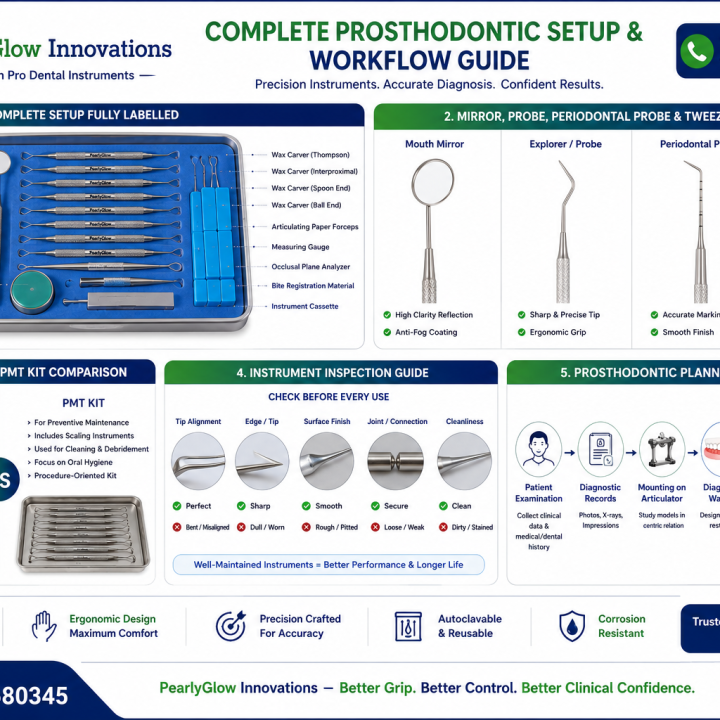
A standard diagnostic kit typically includes:
- Dental mouth mirror
- Explorer probe
- Periodontal probe
- Cotton pliers
These instruments receive constant daily use, making mirror clarity, handle grip, corrosion resistance, and manufacturing consistency especially important. Even minor quality differences become noticeable after hundreds of sterilization cycles See our complete diagnostic instruments guide for a full breakdown of what to look for in each tool. .(Check more)
2. Restorative Dental Instruments
Restorative procedures rely on instruments that provide consistent tactile feedback and precise handling.
Common restorative instruments include:
- Dental excavators
- Plastic filling instruments
- Cement spatulas
- Composite placement instruments
- Burnishers
- Carvers
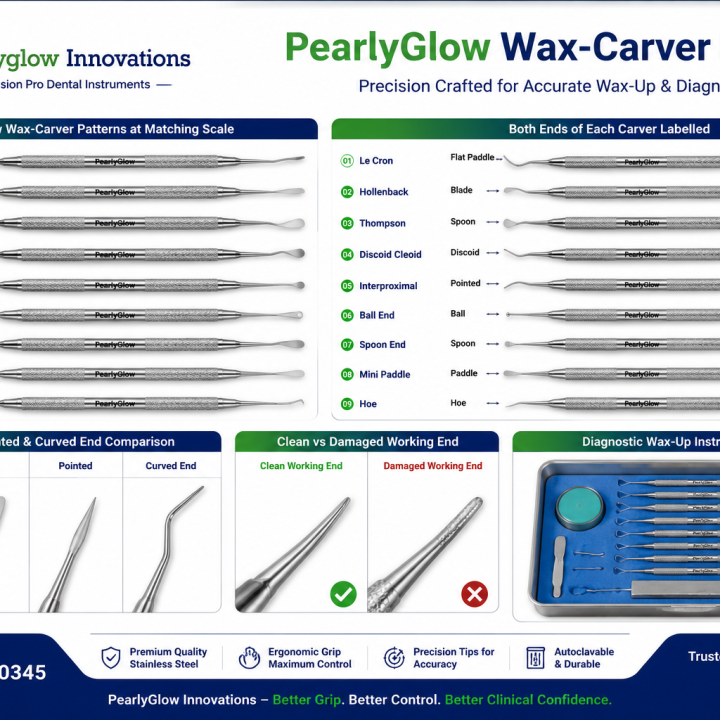
Manufacturing consistency is particularly important in restorative dentistry. Even slight differences in blade angle or working-end dimensions between production batches can affect clinical performance and operator confidence Read our full restorative instruments guide to compare options in detail ……… (Check more)
3. Surgical Dental Instruments
Surgical procedures demand the highest level of manufacturing precision.
Essential surgical instruments include:
- Dental extraction forceps
- Elevators
- Surgical scissors
- Needle holders
- Bone files
- Surgical curettes
Poor grip, hinge looseness, or slight beak misalignment can negatively affect procedural accuracy Surgical Dental Instruments (Check more) During difficult extractions, secure handling becomes critical for both clinician comfort and patient safety.
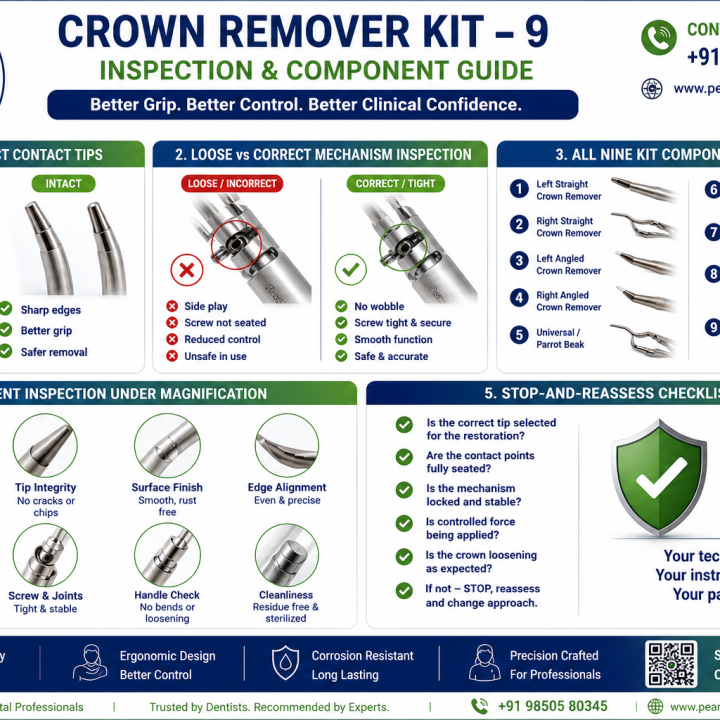
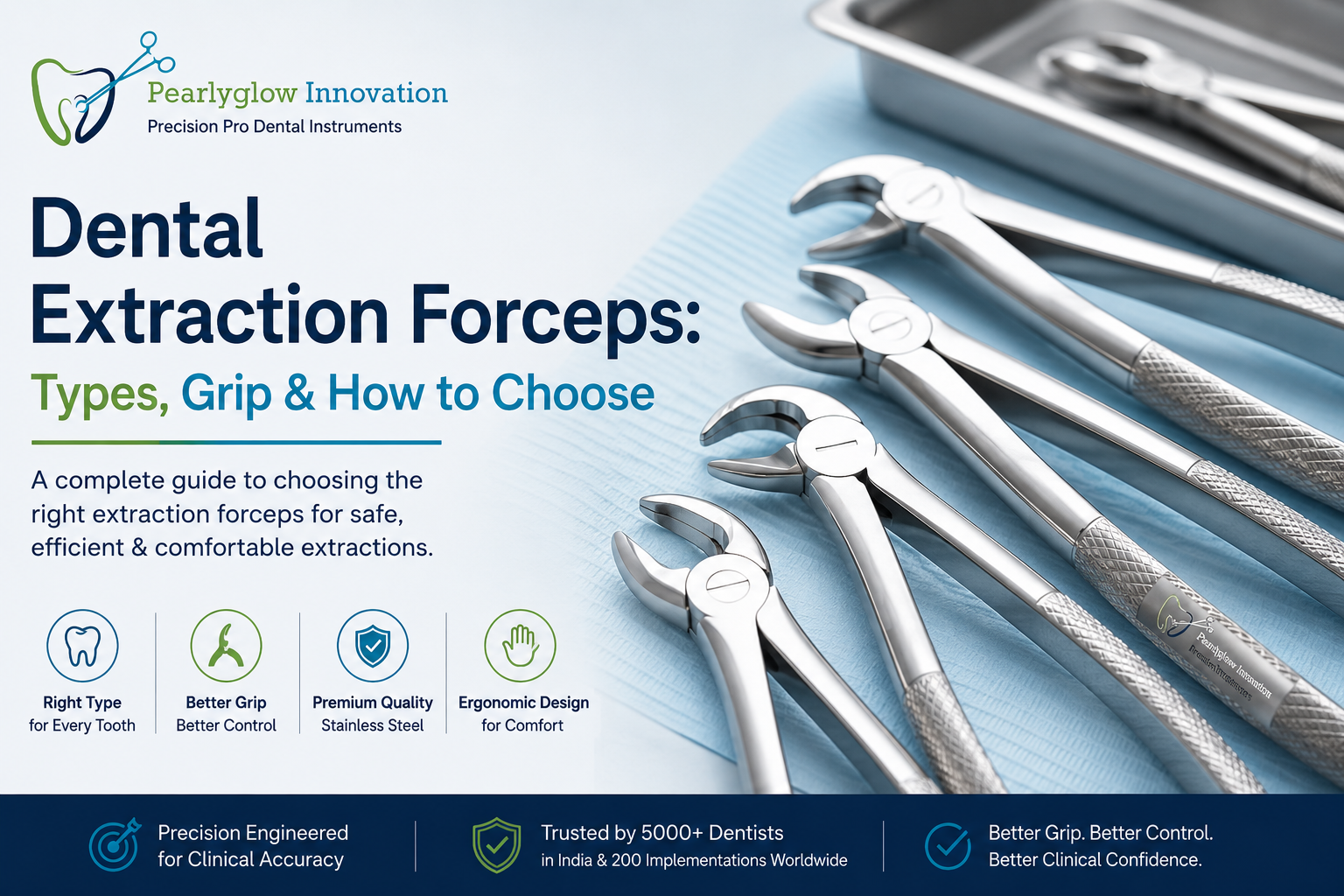
Extraction forceps deserve particular attention because they experience significant mechanical stress throughout their service life Extraction forceps ( Check more) . Features such as knurled handles, precision-machined beaks, corrosion-resistant coatings, and documented autoclave durability contribute directly to long-term clinical performance See how black-coated forceps compare to standard uncoated options . (Check more)
4. Periodontal Instruments
Successful periodontal therapy depends heavily on instruments that maintain a sharp working edge.
Typical periodontal instruments include:
- Universal scalers
- Gracey curettes
- Periodontal probes
- Hoe scalers
- Chisels
Inferior steel dulls quickly, requiring more frequent sharpening and greater operator force during scaling and root planing. High-quality surgical-grade stainless steel maintains edge retention significantly longer, improving both treatment efficiency and patient comfort.
5. Endodontic Instruments
Endodontic procedures require exceptional dimensional accuracy.
Common endodontic instruments include:
- Root canal files
- Reamers
- Spreaders
- Pluggers
- Endodontic explorers
Even very small dimensional variations can influence working length accuracy, canal preparation, and obturation quality. Manufacturers with strict production tolerances generally provide more predictable clinical performance.
Materials and Build Quality That Actually Matter
Not all stainless steel dental instruments deliver the same level of performance, even if their appearance is nearly identical.
When evaluating instrument quality, consider these factors:
Steel Grade — Ask manufacturers to specify the exact stainless steel grade instead of accepting generic descriptions such as "surgical stainless steel." Higher-grade alloys generally provide superior corrosion resistance, hardness, and long-term durability.
Corrosion Resistance — Indian clinics frequently operate in humid environments where corrosion develops more rapidly. Quality instruments retain their surface finish, cutting edges, and working accuracy much longer than lower-grade alternatives Corrosion Resistance (Check more) .
Autoclave Durability — Reliable manufacturers should clearly state the number of validated sterilization cycles their instruments have undergone during testing. Instruments designed for repeated autoclave use maintain structural integrity and clinical performance over many years.
Ergonomic Design — Long clinical sessions place significant strain on dentists' hands and wrists. Balanced instruments with textured or knurled handles improve grip, reduce hand fatigue, and provide better control during precision procedures.
Premium vs Generic Dental Instruments
| Feature | Premium Dental Instruments | Generic Dental Instruments |
|---|---|---|
| Steel Grade | Clearly documented surgical-grade steel | Often unspecified |
| Corrosion Resistance | High resistance to rust and staining | Greater risk of corrosion |
| Autoclave Testing | Documented sterilization cycle validation | Testing information often unavailable |
| Manufacturing Consistency | Tight quality control between batches | Quality may vary from batch to batch |
| Ergonomic Design | Better grip and balanced handling | Basic handle design |
| Long-Term Cost | Lower replacement frequency | Higher lifetime replacement costs |
| Documentation | Steel grade and testing records available | Limited technical documentation |
Rather than focusing solely on purchase price, clinics should evaluate the total cost of ownership total cost of ownership (Check more) . Instruments that remain sharp, corrosion-resistant, and dimensionally stable over thousands of procedures often provide substantially greater long-term value.
Standards and Documentation: What to Verify Before Choosing a Premium Dental Instrument Manufacturer
Selecting a dental instrument manufacturer should be based on documented quality rather than catalogue claims alone. Reliable manufacturers are transparent about their materials, testing procedures, manufacturing standards, and quality control processes Use our manufacturer documentation checklist to verify these claims before ordering (Check more) . Before making a purchasing decision, verify the following:
- Steel Grade Documentation — Request the exact stainless steel grade used in the instruments. Terms such as "medical grade" or "surgical stainless steel" are not sufficient unless supported by documented specifications.
- Regulatory Compliance — If your clinic, hospital, or institution requires internationally recognized compliance, verify whether the instruments meet applicable CE requirements and request supporting documentation where relevant.
- Autoclave Cycle Testing — Ask how many sterilization cycles the instruments have been tested for and whether the manufacturer can provide documented testing data. Reliable instruments should maintain their strength, alignment, and corrosion resistance after repeated sterilization.
- Batch Consistency — Manufacturing consistency ensures that instruments purchased today perform the same as future orders. Ask how the manufacturer maintains quality across different production batches.
- Manufacturing Process Transparency — Manufacturers committed to quality should be able to walk you through their production process, quality checks at each stage, and how defects or inconsistencies are caught before instruments are packaged. A manufacturer confident in its process explains this readily rather than deflecting the question.
A manufacturer that willingly shares technical documentation demonstrates confidence in its products. Transparency should be considered an essential factor when evaluating long-term suppliers.
Sterilization and Infection Control in Daily Practice
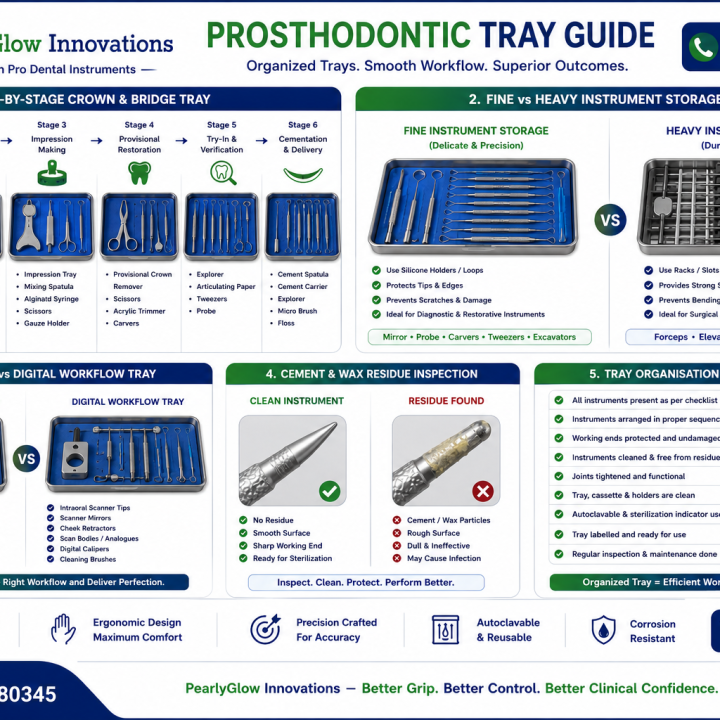
Proper infection control is just as important as instrument quality. Even premium dental instruments can experience premature wear if cleaning, sterilization, and storage procedures are not performed correctly.
Autoclave sterilization remains the accepted standard for reusable dental instruments. Clinics that perform multiple procedures daily require instruments specifically designed to withstand frequent sterilization without losing precision or corrosion resistance.
A recommended instrument reprocessing workflow includes:
- Pre-cleaning immediately after use
- Ultrasonic cleaning where appropriate
- Thorough rinsing and drying
- Proper packaging before sterilization
- Correct autoclave loading
- Complete drying before storage
- Storage in a clean, dry, well-ventilated cabinet
Indian clinics should pay particular attention to humidity. Moisture trapped during storage can accelerate corrosion even after successful sterilization, reducing the service life of otherwise high-quality instruments.
The Centers for Disease Control and Prevention (CDC) recommends validated procedures for cleaning, packaging, sterilizing, monitoring, and storing reusable dental instruments to minimize cross-contamination and improve patient safety.
CDC Guidelines: https://www.cdc.gov/dental-infection-control/hcp/summary/sterilization-disinfection.html
Dentists practicing in India can also refer to the Indian Dental Association (IDA) for continuing education, professional resources, and updates on clinical best practices.
Indian Dental Association: https://www.ida.org.in
Pre-Purchase Checklist for Dental Instruments and Equipment
Before selecting your supplier, ask the following questions:
- Does the manufacturer provide documented steel grade specifications?
- Are the instruments validated for repeated autoclave sterilization?
- Is corrosion resistance supported by testing?
- Does the manufacturer maintain consistent quality across production batches?
- Are technical documents available upon request?
- Is responsive technical or after-sales support available?
- Does the supplier have experience serving dental clinics, hospitals, or educational institutions?
If you answer "No" to more than one of these questions, consider evaluating additional suppliers before making your investment.
Key Takeaways
- A complete dental instrument set includes diagnostic, restorative, surgical, periodontal, and endodontic instruments.
- High-quality stainless steel improves corrosion resistance, durability, and clinical precision.
- Manufacturers should provide documented steel grades, sterilization testing, and quality records.
- Indian clinical environments require instruments capable of withstanding high humidity and frequent sterilization.
- Ergonomic design reduces hand fatigue and improves clinical control.
- Long-term performance and documented quality provide better value than choosing instruments based solely on purchase price.
About PearlyGlow Innovations
Choosing a manufacturer that combines documented quality, reliable manufacturing, and responsive customer support can significantly improve the long-term performance of your dental instruments.
PearlyGlow Innovations manufactures premium dental instruments for Indian dental professionals, with a focus on precision, corrosion resistance, ergonomic handling, and durability under frequent sterilization. Its product range is designed to support the daily clinical demands of general practitioners, specialists, hospitals, and dental institutions.
Looking for Reliable Dental Instruments?
Request the latest PearlyGlow catalogue, compare instrument options, or speak with our team to find the right solution for your clinic.
📱 WhatsApp: +91 98505 80345
Message: "Hi PearlyGlow, I'd like to receive your dental instrument catalogue."
References
- Centers for Disease Control and Prevention (CDC) — Sterilization and Disinfection in Dental Settings: https://www.cdc.gov/dental-infection-control/hcp/summary/sterilization-disinfection.html
- Indian Dental Association (IDA) — Professional Resources for Dental Professionals: https://www.ida.org.in
Reviewed By
PearlyGlow Innovations Technical Team
The PearlyGlow Innovations Technical Team brings expertise in the design, manufacturing, and quality assurance of premium dental instruments for general dentists, specialists, hospitals, and dental institutions across India. The team works closely with dental professionals to develop instruments that emphasize precision, durability, corrosion resistance, ergonomic handling, and consistent clinical performance.
This article has been technically reviewed for manufacturing accuracy, instrument selection guidance, sterilization considerations, and clinical relevance before publication.
Frequently Asked Questions
What instruments does a new dental clinic need first?
A new dental clinic should begin with essential diagnostic instruments, a restorative kit, basic surgical instruments such as extraction forceps and elevators, and periodontal instruments. Specialty instruments can be added as clinical services expand.
How long should dental instruments last with proper care?
High-quality stainless steel dental instruments can remain clinically effective for many years when cleaned, sterilized, inspected, and stored correctly. Their lifespan depends on steel quality, manufacturing standards, frequency of use, and maintenance practices.
What makes coated extraction forceps different from uncoated ones?
Protective coatings improve corrosion resistance, reduce surface staining, and help maintain instrument appearance during repeated sterilization cycles. Some coatings also enhance grip and simplify maintenance.
What documentation should a dental instrument manufacturer provide?
Manufacturers should provide steel grade specifications, sterilization testing reports, manufacturing quality documentation, and batch consistency records so buyers can verify product quality before purchasing.
How does bulk procurement affect dental instrument pricing?
Bulk procurement generally reduces the cost per instrument for clinics, hospitals, and dental colleges. Purchasing decisions should balance price with documented quality, durability, and long-term value.
What is the difference between diagnostic and restorative instruments?
Diagnostic instruments help examine and identify oral conditions, while restorative instruments are used to repair teeth using fillings, restorative materials, and other treatment procedures.
What is the best stainless steel for dental instruments?
The ideal stainless steel depends on the instrument's purpose. High-quality surgical-grade stainless steel is commonly preferred because it offers excellent corrosion resistance, strength, hardness, and durability under repeated sterilization.
How often should dental instruments be inspected for wear?
Dental instruments should be visually inspected after cleaning and before sterilization as part of routine reprocessing. Regular inspections help identify corrosion, dull cutting edges, loose joints, or damage before instruments are returned to clinical use.
What certifications should a dental instrument manufacturer have?
A dental instrument manufacturer should be able to demonstrate documented steel grade specifications, validated sterilization testing, and consistent quality control across production batches. Ask for this documentation directly rather than relying on general certification claims alone.