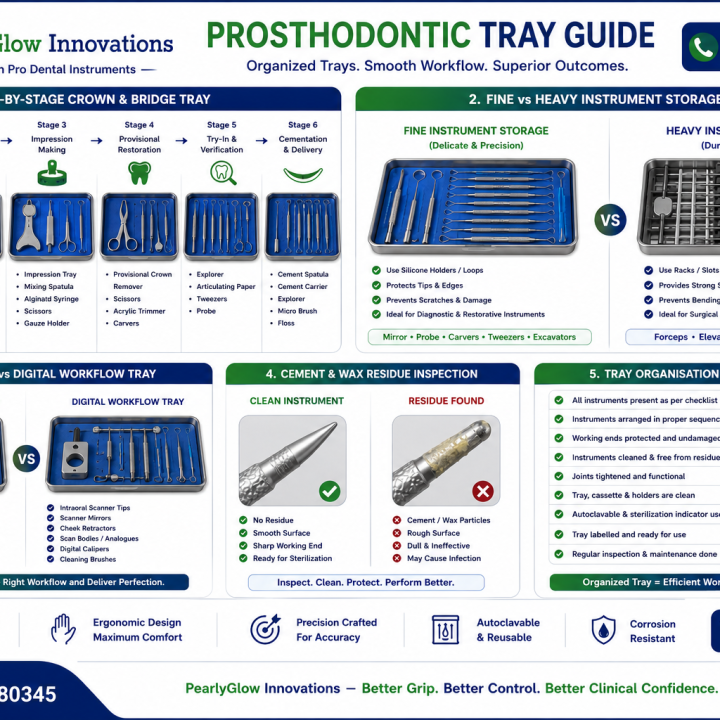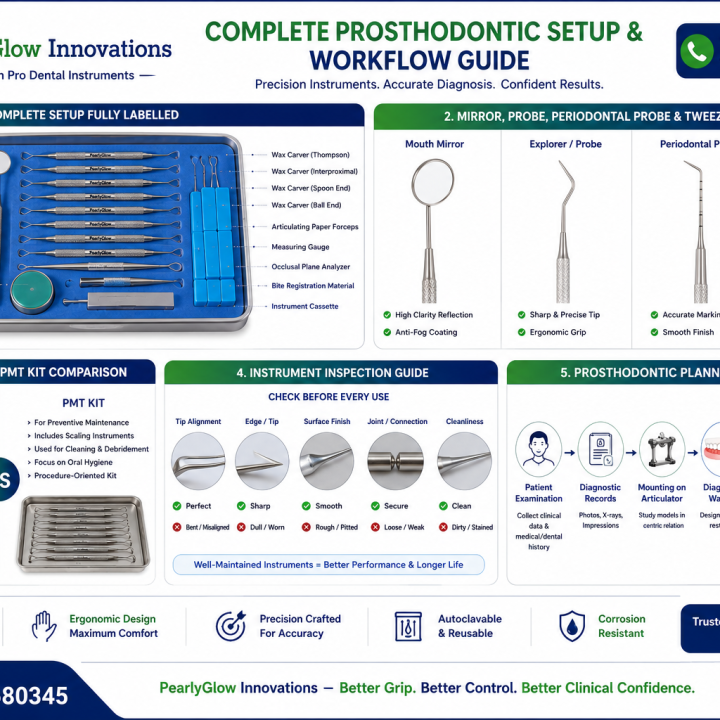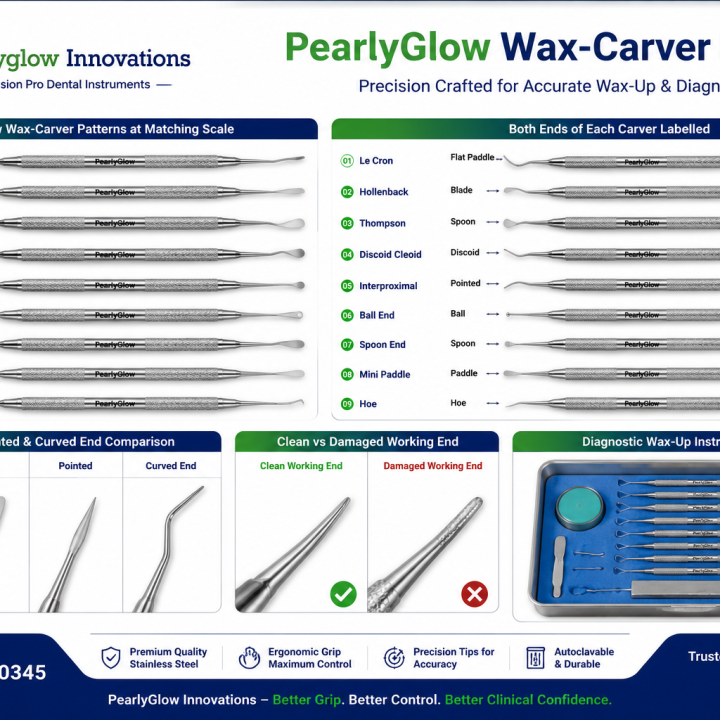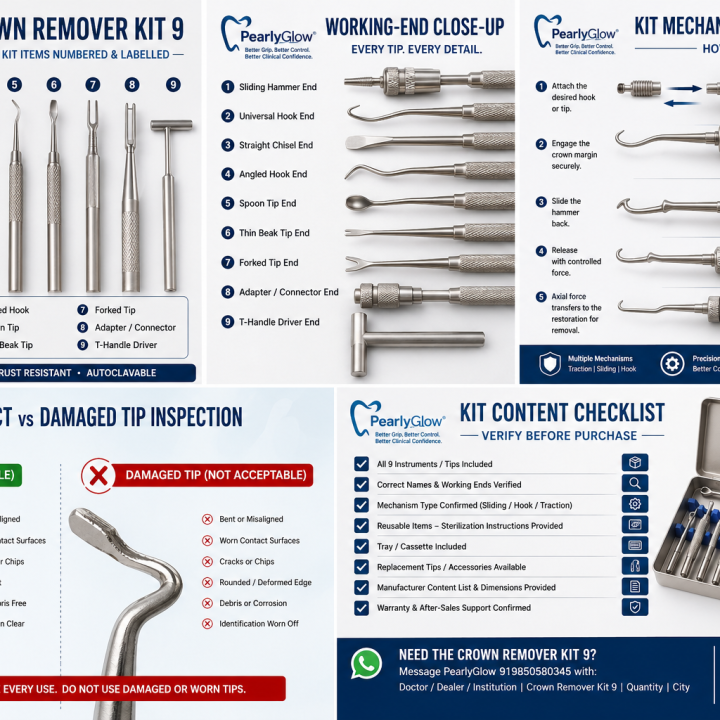
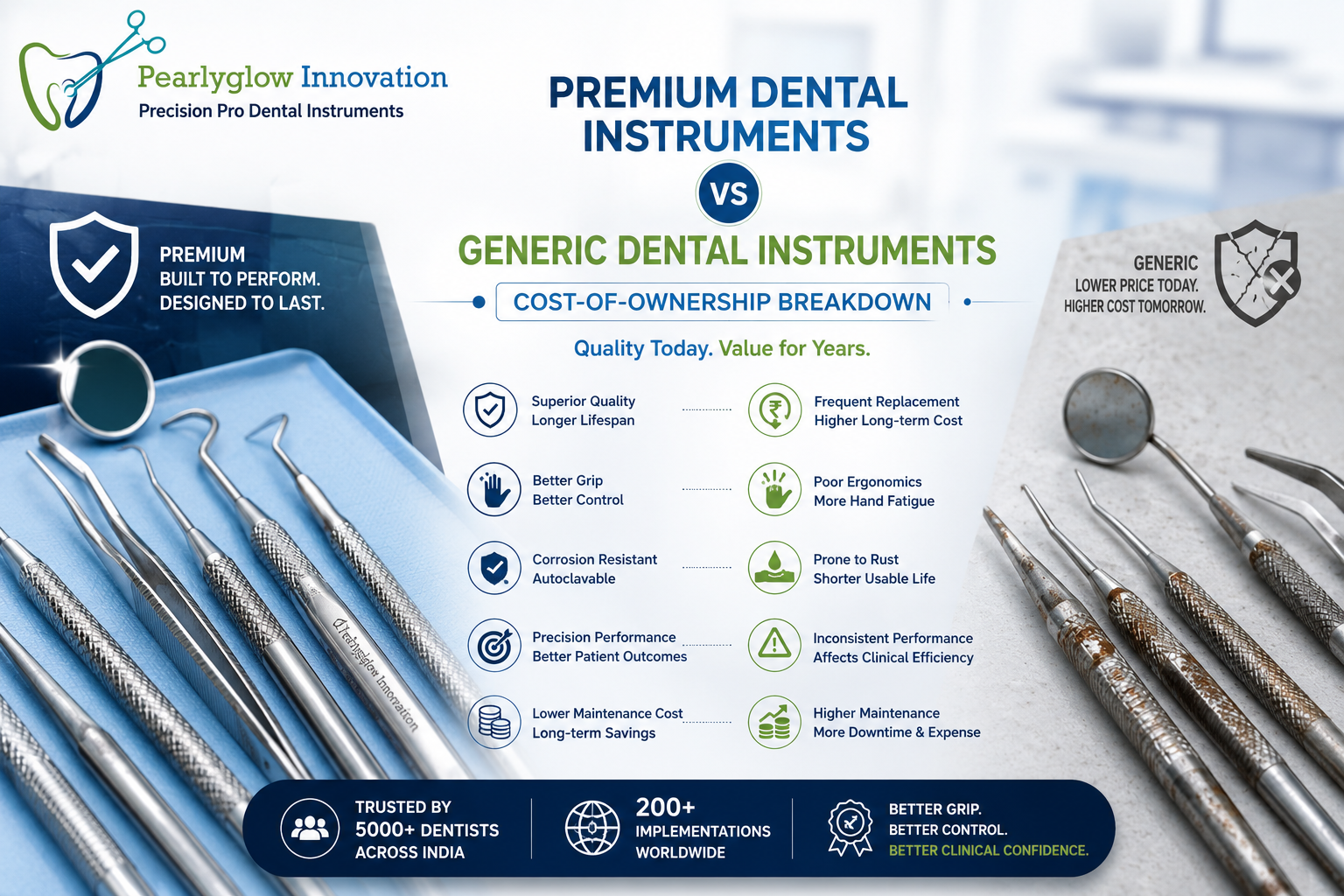
Premium Dental Instruments vs Generic: Cost Breakdown.
Premium Dental Instruments vs Generic Dental Instruments: Cost-of-Ownership Breakdown
Quick Answer
Premium dental instruments generally cost more upfront but often provide better precision, durability, corrosion resistance, and longer service life. Generic instruments may have a lower purchase price, but factors such as replacement frequency, maintenance, and inconsistent performance can increase the overall cost of ownership over time.
Introduction
Premium dental instruments are an investment in long-term clinical performance rather than simply a higher-priced purchase. When evaluating instruments, dentists should consider not only the initial buying cost but also maintenance, durability, replacement frequency, and everyday usability.
Many clinics compare premium and generic instruments based only on price. However, the true value becomes clearer when the total cost of ownership is evaluated over several years of routine clinical use. (Check more)
Why This Matters for Indian Dentists
Dental clinics across India perform thousands of routine procedures every day using instruments that undergo repeated cleaning, sterilization, and handling. General dental practices often use the same hand instruments multiple times throughout a working day, making durability and consistency important considerations.
For clinics operating with limited procurement budgets, affordable instruments may initially appear economical. However, instruments requiring more frequent replacement or maintenance can increase long-term operating costs compared with high-quality dental instruments designed for extended clinical use.
A well-planned purchasing strategy should balance acquisition cost with reliability, longevity, and clinical efficiency.
Understanding Cost of Ownership
The purchase price is only one component of an instrument's overall value.
The cost of ownership includes every expense associated with using an instrument throughout its working life, including:
- Initial purchase cost
- Cleaning and sterilization
- Maintenance and repairs
- Replacement frequency
- Clinical efficiency
- Downtime due to damaged instruments
Evaluating these factors provides a more realistic picture than comparing catalogue prices alone.
Premium Dental Instruments vs Generic Dental Instruments
Although both categories perform the same clinical functions, differences often exist in manufacturing quality, material selection, finishing processes, and long-term durability.
| Comparison | Premium Dental Instruments | Generic Dental Instruments |
|---|---|---|
| Initial Cost | Higher | Lower |
| Manufacturing Precision | High | Can vary |
| Stainless Steel Quality | Consistent | Varies by manufacturer |
| Ergonomics | Carefully balanced | May differ between batches |
| Corrosion Resistance | Generally higher | Depends on steel quality |
| Service Life | Typically longer | May require earlier replacement |
| Clinical Consistency | High | May vary |
The objective is not simply to purchase the least expensive instrument but to select products that deliver consistent performance throughout their service life.
Where Premium Dental Instruments Add Value
1. Better Manufacturing Precision
Premium dental instruments are typically manufactured with tighter quality controls, resulting in consistent working-end dimensions, hinge alignment, and instrument balance (Check more)
Improved precision helps clinicians perform procedures with greater confidence and predictability.
2. Improved Ergonomics
Well-designed ergonomic dental instruments reduce hand fatigue during repetitive procedures.
Balanced handles and comfortable grip patterns contribute to better instrument control throughout long clinical sessions.
3. Enhanced Corrosion Resistance
High-quality stainless steel and improved finishing processes contribute to corrosion-resistant dental instruments that withstand repeated autoclave cycles (Check more)
Maintaining surface integrity also supports easier cleaning and longer instrument life.
4. Longer Service Life
Premium instruments are generally designed to retain their functionality over extended periods when maintained according to manufacturer recommendations.
Although the purchase price may be higher, a longer service life can reduce replacement frequency.
When Generic Dental Instruments May Be Suitable
Generic instruments continue to play an important role in many practices.
They may be appropriate for:
- Student training
- Backup instrument sets
- Temporary clinic setups
- Budget-conscious procurement
- Low-frequency procedures
However, buyers should carefully evaluate steel quality, finishing, hinge alignment, and manufacturer reliability before making purchasing decisions.
Factors That Influence the Total Cost of Ownership
Several factors determine whether an instrument represents good long-term value.
1. Replacement Frequency
Replacing lower-cost instruments more often may increase total expenditure over time.
2. Maintenance Requirements
Higher-quality instruments generally require routine maintenance, but consistent manufacturing may reduce the likelihood of premature repairs.
3. Sterilization Performance
Autoclavable dental instruments should maintain their finish and functionality after repeated sterilization.
Poor surface quality can increase the risk of corrosion and reduce usable life.
4. Clinical Efficiency
Precision working ends and balanced handles help clinicians work more efficiently, particularly during procedures requiring fine motor control.
Although efficiency is difficult to quantify, consistent instrument performance contributes to smoother workflows.
How to Choose the Best Dental Instruments for Your Clinic
Before purchasing, evaluate more than price alone.
Consider:
- Steel quality
- Manufacturing consistency
- Ergonomic handle design
- Corrosion resistance
- Warranty or manufacturer support
- Availability of replacement instruments
- Supplier reputation
- Long-term maintenance requirements
The best dental instruments for clinics are those that provide dependable clinical performance while supporting long-term operational efficiency (Check more)
Expert Insight from PearlyGlow Innovations
PearlyGlow Innovations has worked with dental professionals across India to understand how instrument quality affects everyday clinical practice. Having served over 5,000 dentists and completed more than 200 implementations worldwide, the company has gained practical insights into the factors that influence long-term instrument performance. Clinical feedback consistently emphasizes the importance of precision manufacturing, ergonomic design, corrosion-resistant materials, and consistent quality across production batches. Rather than evaluating instruments solely on purchase price, PearlyGlow Innovations focuses on manufacturing products that deliver reliable handling, durability, and predictable performance throughout repeated clinical use and sterilization.
Key Takeaways
- Premium dental instruments offer greater long-term value through durability, precision, and consistent performance.
- The lowest purchase price does not always result in the lowest total cost of ownership.
- Corrosion resistance, ergonomic design, and manufacturing quality directly influence instrument lifespan.
- Clinics should evaluate maintenance, replacement frequency, and clinical efficiency before purchasing.
- Selecting a trusted manufacturer supports reliable performance and consistent quality over time.
About PearlyGlow Innovations
PearlyGlow Innovations Pvt. Ltd. manufactures premium dental instruments for dentists (Che ck more), oral surgeons, hospitals, dental colleges, and distributors. Guided by the promise of Better Grip. Better Control. Better Clinical Confidence., the company has served over 5,000 dentists and completed more than 200 implementations worldwide. For product catalogues, pricing, or dealership enquiries, WhatsApp 98505 80345.
Conclusion
Choosing premium dental instruments should be viewed as a long-term investment rather than a short-term expense. While affordable dental instruments may reduce the initial purchase cost, factors such as durability, maintenance, corrosion resistance, and replacement frequency determine the true cost of ownership. By evaluating manufacturing quality, ergonomics, and lifecycle value, clinics can make informed purchasing decisions that support consistent clinical performance and operational efficiency (Check more)
Frequently Asked Questions
Are premium dental instruments worth the higher price?
Yes. Premium dental instruments generally provide better manufacturing precision, improved durability, corrosion resistance, and a longer service life. These advantages can reduce replacement frequency and support consistent clinical performance over time.
What is the cost of ownership for dental instruments?
The cost of ownership includes the purchase price, maintenance, sterilization, repairs, replacement frequency, and the instrument's usable lifespan. Considering all these factors provides a more accurate assessment than comparing initial prices alone.
Do premium instruments last longer than generic instruments?
High-quality instruments manufactured with premium stainless steel and consistent quality control are generally designed for longer service life when properly maintained. Actual lifespan depends on usage, care, and sterilization practices.
What should I consider before buying dental instruments?
Evaluate steel quality, manufacturing precision, ergonomic design, corrosion resistance, warranty, supplier reputation, and availability of replacement instruments. These factors have a greater impact on long-term value than purchase price alone.
Are generic dental instruments suitable for all clinics?
Generic instruments may be suitable for student training, backup instrument sets, or low-frequency procedures. Clinics performing high patient volumes often prioritize durability and consistency to support everyday clinical demands.
Why is corrosion resistance important?
Corrosion-resistant dental instruments maintain their finish, structural integrity, and functionality through repeated cleaning and sterilization. This helps extend instrument life and supports consistent clinical performance.