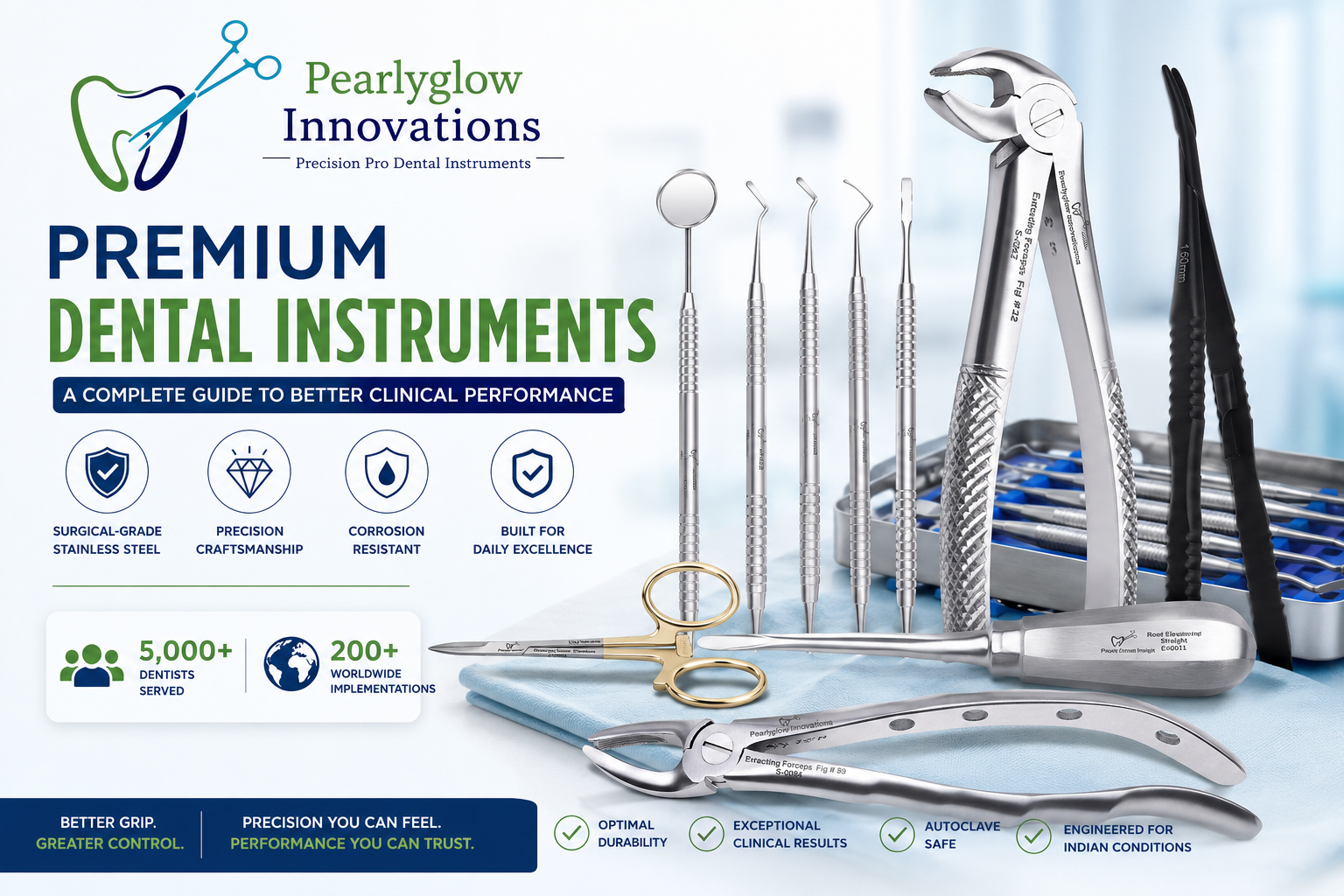
Premium Dental Instruments Guide | PearlyGlow India.
Premium Dental Instruments: A Complete Guide to Better Clinical PerformanceQuick Answer
A premium dental instrument is forged from surgical-grade stainless steel, holds its edge and grip across hundreds of autoclave cycles, and resists corrosion in India's humid clinical conditions. PearlyGlow Innovations has served over 5,000 dentists and completed 200+ worldwide implementations, supplying instruments built for daily surgical use, not occasional demonstrations.
Every dentist has felt it mid-extraction: a slipping grip, a beak that won't seat cleanly, a spatula that flexes when it shouldn't. A premium dental instrument is built specifically to remove that uncertainty from procedures that leave no room for error.
This isn't about buying the most expensive tray in the catalogue. It's about understanding what actually separates an instrument that holds up for a decade from one that needs replacing in eight months (Check more).
What "Premium" Actually Means in Dental Instruments
Premium isn't a marketing word — it refers to specific, checkable manufacturing choices. Three things determine whether an instrument deserves the label: the steel, the process, and the finish.
Surgical grade stainless steel is the starting point. Most premium instruments use medical grade stainless steel graded to withstand repeated sterilisation without pitting or discolouration. German stainless steel has long been the reference standard in dentistry because of its consistent carbon content and corrosion resistance (Check more).
Forging versus casting is the next differentiator, and it's worth understanding in more detail because it's rarely explained on a spec sheet. Forged instruments start as a solid steel blank that is heated and shaped under high pressure, which compresses the internal grain structure and removes microscopic voids. This makes the metal denser and stronger exactly where it needs to be — the beak of a forceps, the tip of an elevator, the working end of a luxator.
Cast instruments are made by pouring molten steel into a mould, which is faster and cheaper but leaves the grain structure looser and less predictable. A cast instrument can look identical to a forged one on the shelf, and often performs well for the first few months. The difference shows up later, as fatigue cracking, beak misalignment, or a hinge that develops play after repeated stress.
Finish quality matters more than most buyers realise. A true mirror finish isn't cosmetic — it reduces surface micro-porosity where bacteria and corrosion can take hold, and it makes visual inspection for cracks or wear far easier during your sterilisation checks. A dull or inconsistent finish is often the first visible sign of an inferior polishing process, even before any functional problem appears.
When these three factors align, you get corrosion resistant instruments that maintain their edge and grip over years, not months. When they don't, you get instruments that look fine on day one and fail quietly by month six, usually without any obvious warning.
Instrument Categories Every Indian Clinic Should Standardise
Not every instrument in your clinic needs to be premium grade. But certain categories see enough stress and enough patient contact that cutting corners becomes a false economy.
- Extraction instrument kits — forceps, elevators, and luxators that face direct bone and root pressure during every extraction (Check more).
- Tooth extraction instruments for specific tooth groups, since a mismatched beak angle increases procedure time and patient trauma.
- Oral surgery instruments used in flap procedures, where precision and rust resistant dental instruments matter for both outcome and infection control (Check more).
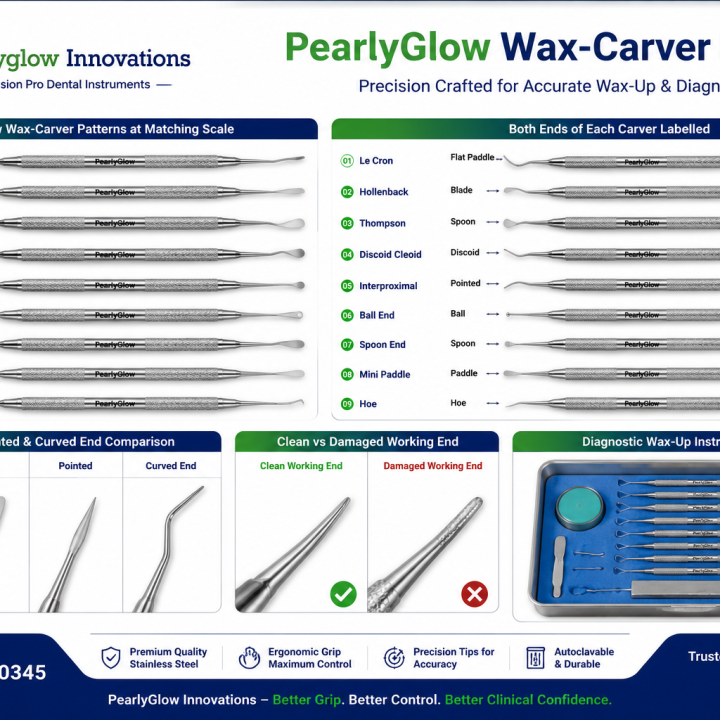
- Composite filling instruments — condensers and carvers that need a stable edge to shape restorations accurately.
- Cement spatula and mixing tools, where a flexible or pitted blade directly affects cement consistency and bond strength.
A useful rule: any instrument that touches bone, blood, or a permanent restoration is worth upgrading first. Instruments used for basic examination can follow later.
This phased approach also makes budgeting more realistic for smaller clinics and PG students setting up practice for the first time. Rather than replacing an entire tray at once, prioritising the categories above lets a clinic upgrade progressively without disrupting cash flow or daily operations.
What to Check Within Each Category
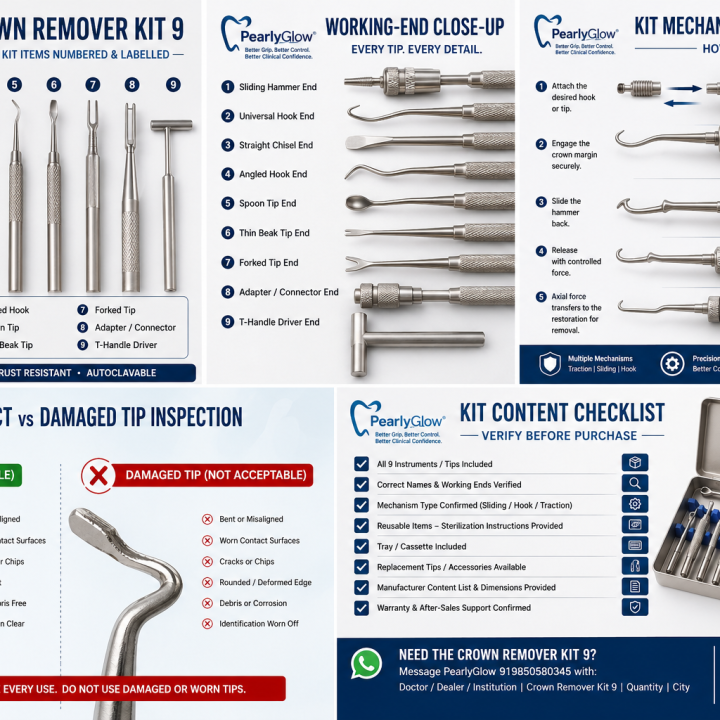
Extraction forceps should be evaluated by beak fit, not handle comfort alone. Close the beaks on a tooth model or spare tooth and check for a flush contact along the entire beak length, since gaps at the tip are what cause slippage during actual extraction.
Elevators and luxators depend on blade sharpness and shank rigidity. A luxator that flexes under normal hand pressure will transmit less force to the periodontal ligament, which means more time and more trauma per extraction.
Composite filling instruments are judged differently — here, the working tip's resistance to composite material matters most. A tip with a poor finish will accumulate material and require constant cleaning mid-procedure, which slows down restorative work and affects the final surface finish.
Cement spatulas are simple in design but easy to get wrong. A spatula blade that flexes during mixing produces inconsistent cement thickness, which can affect bond strength in ways that aren't visible until the restoration fails later.
Case in Point: The Black Extraction Forceps
PearlyGlow Innovations' Premium Black Extraction Forceps (Check here) is a practical example of how design choices translate into chairside performance. The knurled grip pattern is cut into the handle, not printed, so it stays functional even after hundreds of sterilisation cycles.
The black coating isn't decorative. It's a rust-resistant surface treatment that protects the underlying steel in India's variable humidity, particularly relevant for clinics without climate-controlled sterilisation rooms.
The beaks are precision engineered to maintain a tight, accurate bite on the tooth, which reduces slippage during extraction and shortens procedure time. Combined with a balanced, ergonomic handle, the forceps is rated for 1,000+ autoclave cycles without loss of grip or finish — a specification worth verifying with any supplier before you buy.
Why This Matters for Indian Dentists Specifically
India's clinical environment creates conditions that instrument manufacturers in drier climates rarely account for. Humidity, inconsistent autoclave maintenance across smaller clinics, and high patient volumes per dentist all accelerate instrument wear.
By some industry estimates, India's national dentist-to-population ratio sits around 1:3,700 — well ahead of the WHO's benchmark of 1:7,500 for adequate access. But that average hides a sharp urban skew: roughly 85% of dentists practice in cities, which means a busy urban clinic often carries a patient load far heavier than the national figure suggests, and puts extraction and surgical instruments through more cycles per month than the average would indicate.
Many Indian clinics still rely on imported premium dental instrument sets sourced through multiple distributors, which pushes up cost and lengthens replacement lead times when an instrument fails mid-week. A domestically manufactured, quality-controlled alternative shortens that gap considerably.
- Replacing a corroded forceps mid-procedure costs chair time, not just the instrument price.
- A slipping grip during extraction increases the risk of soft tissue injury and rework.
- Instruments that fail sterilisation inspection early create compliance risk during clinic audits.
- PG students and new practitioners often inherit poor instrument habits from underperforming starter kits.
- Dental colleges training the next generation of oral surgeons need instruments that behave consistently, not variably.
Sterilisation and Maintenance Habits That Extend Instrument Life
Even a well-made instrument underperforms if sterilisation and storage habits work against it. A few practical adjustments make a measurable difference over an instrument's working life (Check more).
Rinse instruments promptly after use, before blood or debris dries onto the surface. Dried organic material left in hinge joints or beak serrations is one of the most common causes of early corrosion, and it's avoidable with a simple pre-soak or immediate rinse.
Avoid mixing instrument types in the same ultrasonic cleaning cycle if their metals differ, since dissimilar metals in the same bath can cause galvanic corrosion over repeated cycles. Dry instruments fully before autoclaving where your protocol allows it, since residual moisture left in packaging can encourage spotting even on corrosion resistant instruments.
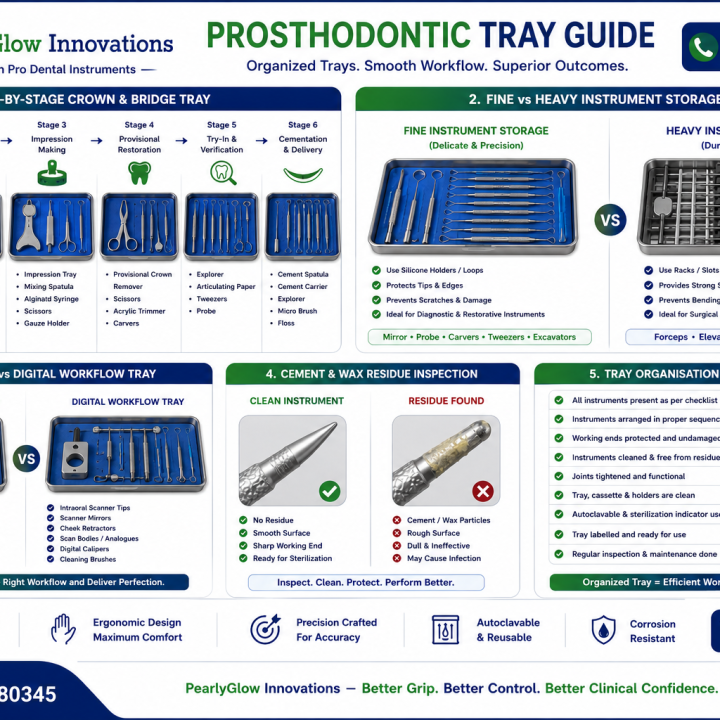
Store instruments in a dedicated tray or pouch rather than loose in a drawer, where beaks and tips can chip against each other. A ten-second habit at the end of each day protects an investment that's meant to last years, not months.
Domestically Manufactured vs Imported Instruments
Indian clinics typically choose between two sourcing paths: imported instrument sets, often from European or Pakistani manufacturers routed through multiple distributors, or domestically manufactured instruments produced and quality-checked within India.
Imported instruments carry a longstanding reputation, particularly German-origin sets, but they usually come with a longer replacement cycle. If a forceps is damaged or lost, reordering through a distributor chain can take weeks, which is a real problem for a busy clinic that can't pause extractions while waiting.
Domestic manufacturing has closed much of the quality gap in recent years, provided the manufacturer follows the same steel grade, forging, and finishing standards. The practical advantage is logistics: faster replacement, easier warranty support, and a supplier who can be reached directly rather than through an international chain.
Neither path is automatically correct for every clinic. The right choice depends on verifying the same three fundamentals — steel grade, forging process, and finish quality — regardless of where the instrument was manufactured.
Cost comparisons between the two paths are also easy to get wrong if only the sticker price is considered. An imported forceps priced lower on paper can end up costing more over three years once customs delays, distributor markups, and replacement wait times are factored in. A fair comparison looks at total cost of ownership across an instrument's expected working life, not just the invoice on day one.
Training Your Team to Protect the Investment
The best premium dental instrument still depends on the person handling it after the procedure ends. Chairside assistants and sterilisation staff are often the ones deciding how an instrument is rinsed, cleaned, and stored, not the dentist who purchased it.
A short, written protocol helps more than verbal instructions repeated occasionally. List the rinse-before-soak step, the correct ultrasonic cycle time, and the drying step before autoclaving, and keep it posted near the sterilisation area where staff can reference it daily.
For dental colleges and PG programs, this training matters even more. Students who learn correct instrument handling early carry those habits into independent practice, which protects both patient safety and the college's own instrument inventory over time.
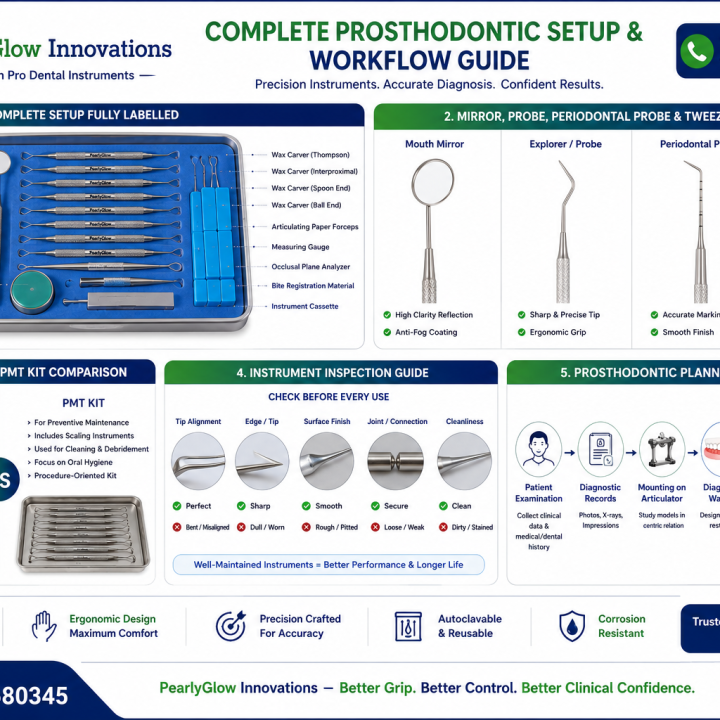
Clinic owners running multiple chairs should also standardise which instruments go into which kits, since inconsistent kit assembly is a common source of missing or mismatched tools mid-procedure. A labelled tray system, checked at the start and end of each day, closes this gap with minimal extra effort.
Pre-Purchase Checklist
Before adding a new instrument line to your clinic or teaching lab, run through these questions:
- Is the steel grade specified in writing, not just described as "surgical grade" without detail?
- Is the instrument forged, and can the supplier confirm this on request?
- Does the finish show visible mirror consistency with no dull patches or pitting?
- Is there a stated autoclave cycle rating backed by testing?
- Does the grip remain secure when your hand is gloved and slightly damp?
- Is there a local point of contact for replacement or warranty support?
- Has the supplier been used by other Indian clinics you can reference?
If you answer "no" to more than one of these, treat it as a reason to ask more questions before purchasing, not a reason to walk away outright (Check more).
Key Takeaways
- A premium dental instrument is defined by steel grade, forging process, and finish quality — not price alone.
- Extraction kits, oral surgery instruments, and composite filling instruments deserve priority when upgrading, since they see the highest clinical stress.
- India's humidity and autoclave variability make corrosion resistant instruments a practical necessity, not a luxury feature.
- Daily habits like prompt rinsing and separated ultrasonic cleaning meaningfully extend an instrument's working life.
- Always verify autoclave cycle ratings and steel specifications in writing before purchasing any instrument set.
About PearlyGlow Innovations
PearlyGlow Innovations is an Indian dental instruments manufacturer focused on surgical-grade, precision-engineered tools for extraction, oral surgery, and restorative procedures. The brand has supported over 5,000 dentists and completed 200+ worldwide implementations across clinics, colleges, and dealer networks. Every instrument is built around one operating principle: better grip, better control, better clinical confidence.
Check product an WhatsApp us at 98505 80345 — just send: "Hi PearlyGlow, please send me the catalogue." We'll respond within 2 hours.
FAQ
What is the difference between a premium and a standard dental instrument?
A premium instrument uses forged surgical-grade steel and a controlled finish, giving it longer edge retention and better corrosion resistance than a standard cast instrument. Standard instruments are usually adequate for low-frequency, low-stress procedures but wear faster under regular surgical use.
How many autoclave cycles should a good extraction forceps withstand?
A well-manufactured extraction forceps should withstand 1,000 or more autoclave cycles without losing grip texture or developing surface corrosion. Always ask suppliers for this figure in writing rather than assuming it based on price or appearance.
Is German stainless steel necessary for Indian clinical conditions?
German stainless steel is a recognised benchmark for corrosion resistance, but what matters more is consistent quality control during manufacturing. A well-forged, properly finished instrument using an equivalent medical grade stainless steel can perform just as reliably in Indian conditions.
What should be included in a basic extraction instrument kit?
A basic extraction instrument kit should include extraction forceps sized for anterior and posterior teeth, straight and curved elevators, and a luxator for controlled tooth loosening. PG students and new clinics often start here before adding specialised oral surgery instruments.
How do I know if my current instruments need replacing?
Check for visible pitting, dulled cutting edges, a beak that no longer closes flush, or a handle grip that has become smooth and slippery. Any of these signs mean the instrument's sterilisation-cycle life is likely ending and replacement should be planned.
Does cleaning method affect how long an instrument lasts?
Yes, ultrasonic cleaning combined with prompt rinsing after use significantly extends an instrument's working life compared to delayed manual cleaning. Mixing dissimilar metals in the same cleaning bath should be avoided, since it can accelerate corrosion over repeated cycles.
Does PearlyGlow Innovations supply dental colleges and bulk orders?
Yes, PearlyGlow Innovations supplies individual clinics, dental colleges, and dealer networks, with tiered options for teaching labs and high-volume practices. WhatsApp 98505 80345 with your requirement to receive the current catalogue and pricing.